Review · LAPA & SANTA TERESA BOHEMIAN TOURS
Ancient Rio and Santa Teresa Tour with Hotel pick-up and drop-off
Rio’s history starts on a hilltop tram.
This 4-hour Rio classic strings together Santa Teresa with old downtown streets, so you see two very different sides of the city in one go. You walk, you look up, and you learn how these neighborhoods shaped Rio’s identity, from 1900s mansions to grand public buildings.
I especially love the pairing of art-focused Santa Teresa and the downtown architecture stops that are perfect for photos. The day also works well if you want context without committing to museum hours, since several highlights are enjoyed from the sidewalk.
One thing to plan around: no tram ride is included, and some streets are uneven cobblestones. Also, depending on the day, shops can be closed, which can affect the mood in Santa Teresa and the downtown market area.
Key things to look forward to

- Santa Teresa’s 1897 tram presence, plus the neighborhood’s painterly vibe and early-1900s mansions
- Praça XV and Cinelândia as big-picture history spots, with landmark surroundings for easy photos
- Laurinda Santos Lobo’s legacy at Parque das Ruínas, now a cultural center with an artist-support mission
- Downtown architecture without museum lines, including the exterior experience at Theatro Municipal and Biblioteca Nacional
- A local guide factor, where specific guides like Renato, Dario, Wagner, and Monica have strong praise for style and care
Santa Teresa plus Ancient Rio, in one efficient half-day

This tour is built for people who want more than postcard stops. Santa Teresa gives you a slow, storybook feel on the hill, with mansions that date to the 20th century and a visible reminder that the tram system has been around since the late 1800s. Then the route drops you into the historical core for arches, squares, and some of the most famous civic facades in Brazil.
I like the pacing because it is not trying to cram in every museum. Instead, you get walking and looking time where the city tells its story visually. For many first-time visitors, that helps you get your bearings fast, before you decide what to do on the rest of your trip.
The route also respects your time. You are in motion across neighborhoods for about 4 hours, with multiple short stops so you do not spend the whole day in traffic. Still, this is not a sit-and-stare tour. You should expect a fair amount of walking on older streets.
Price and value at about $55 per person

At $55 per person for a roughly 4-hour outing with hotel pickup and drop-off, the value depends on your priorities. If you care about guided interpretation plus efficient sightseeing, this is priced like a practical city-orientation tour, not a full-day ticketed museum marathon.
The big cost advantage is that several stops are free to enjoy, and even the stops tied to major buildings are mostly treated as architectural viewing rather than paid entries. In other words, you are paying for a local route and the guide’s explanation of why these places matter.
The trade-off is that not everything is included. Lunch is not included, and the places where entry would normally cost money are not part of this experience as an inside visit. Also, you should not count on getting into museums or taking the tram ride during the tour window.
Pickup timing, group size, and how the tour feels in motion
You start at Hotel Rio Othon Palace in Copacabana for pickup, and the tour ends back at the meeting point. The key practical detail is that you are sent the proper pickup time after booking, so you should check your email and cell phone for updates.
This is designed for small groups. The max is 19 travelers per minivan, which often helps you hear the guide and get around without feeling like a human traffic jam. You are also not with an endless crowd, which matters on narrow streets in Santa Teresa.
One more timing reality: some tours like this can feel smoother on ordinary weekdays. If your trip lines up with holidays or big events, you can run into delays, and that can compress photo time at each stop. The tour still aims to hit the main points, but the day can feel more rushed when traffic gets messy.
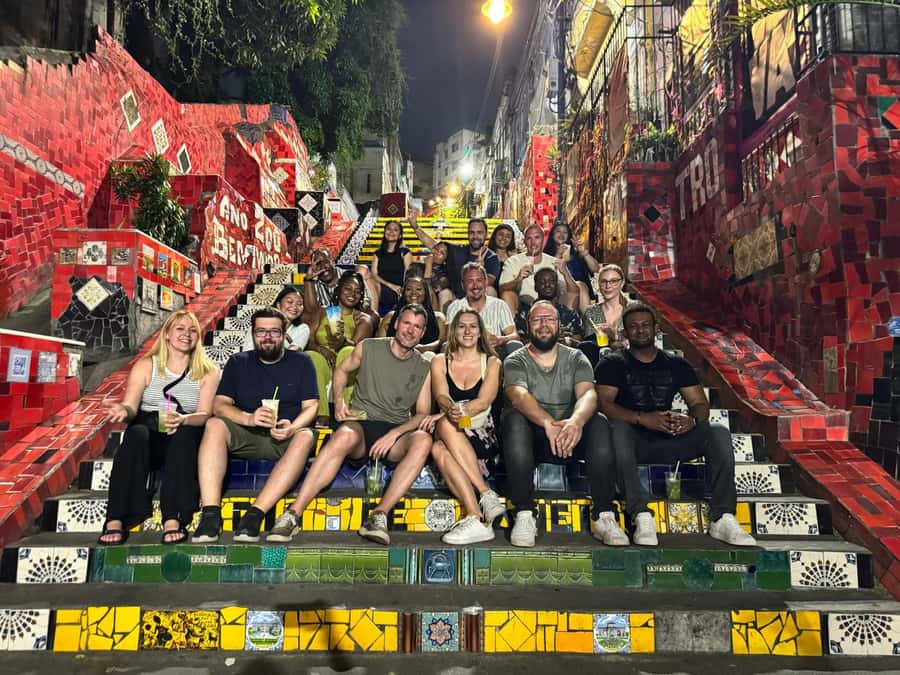
Santa Teresa: mansions, art atmosphere, and the tram you can still spot
Santa Teresa is the first wow moment for most people, and the way this tour presents it helps. You get bucolic streets and that hilltop neighborhood mood where artists have long been drawn. The focus is on walking and looking: admiring mansions from the 20th century and understanding how Santa Teresa became part of Rio’s creative scene.
The guide also points out the tram presence from 1897. Even if you do not ride it here, you are meant to connect the dots between the neighborhood’s rise and the transportation that made it accessible.
What to watch for at this stop
Santa Teresa streets can be uneven. One of the most important practical notes for your planning is comfort. If you have trouble with walking on rough cobblestones, tell yourself this stop is where you feel it most.
Also, this part of the day can look different depending on the calendar. Some days have quieter streets and closed shops, which can reduce the neighborhood’s everyday charm compared with a full business day.
Parque das Ruínas: Laurinda Santos Lobo’s artist-support legacy

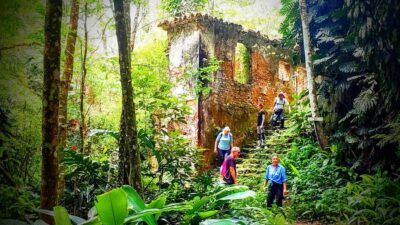
Next you head to Centro Cultural Municipal Parque das Ruínas. This stop is short at about 20 minutes, but it has a specific story behind it. It is the former home of Laurinda Santos Lobo, known as a major supporter of women artists, and the site today functions as a cultural center that keeps her legacy going.
I like this stop because it is not just about architecture. It gives you a human reason to connect to Rio’s art history, not just a name on a plaque. Even in a short visit window, you get a sense that Rio’s cultural life was shaped by individuals who made it possible for artists to work and be seen.
Drawback to plan around
Because this is time-limited, you will not linger like you would in a museum afternoon. Think of it as a focused “pause and learn” moment, not a deep exploration.
Arcos da Lapa and Praça XV: arches, aqueduct leftovers, and civic power

Then the tour moves into the historical center with two strong anchor stops.
Arcos da Lapa
At Arcos da Lapa, you get the story behind an iconic structure: the arches were originally part of a water-transport system. Today, they are also part of daily life in Santa Teresa and nearby areas, acting as a familiar landmark and a transit reference point.
You spend about 30 minutes here, and the time helps because this is a spot where you can orient yourself. Looking at how people move around the arches tells you that these structures are not frozen in time.
Admission is not included for this stop, but the key point is that you are mainly viewing the arches in context rather than paying for a formal entry.
Praça XV de Novembro
Next comes Praça XV de Novembro, a central square surrounded by major civic buildings. The square sits near the Palácio Tiradentes, the Legislative Assembly of Rio de Janeiro, and the Paço Imperial. It is also tied to city transit history through the Praça XV Station, a ferry terminal with routes to other destinations including Niterói.
You get about 30 minutes here and it is a great stop for photos because the square is surrounded by powerful building mass and open sightlines. It is also a helpful break from hilltop walking.
Both these stops make sense because they connect Rio’s physical infrastructure to its political and social center.
Arco do Teles and Cinelândia: market lanes turned hangout streets
After Praça XV, the route continues with two downtown areas that feel very different from each other.
Arco do Teles
Arco do Teles sits in what used to be the downtown market area, and the vibe you get now is small alleys, bars, and restaurants tucked into tighter lanes. The stop is about 20 minutes, which is enough time to grasp the character and grab a few pictures without turning it into a meal break.
This is the kind of stop I like on a guided route because the guide can explain what changed. You see the bones of the old market layout, then you notice how modern daily life fills the spaces.
Cinelândia
Then you hit Cinelândia, a famous downtown square surrounded by historic buildings. You get about 30 minutes here, and it is a classic photo arena. The buildings frame the space, and you can step back to see the composition from different angles.
Even if you have seen Rio photos before, Cinelândia often surprises people because it feels like a formal, civic stage in the middle of a city that also has a very relaxed, street-level personality.
The grand facades: Museu Nacional de Belas Artes, Theatro Municipal, Biblioteca Nacional
Later in the tour, the stops shift to major public architecture. Importantly, you do not enter the museums here. Instead, you spend short periods enjoying architectural features.
Museu Nacional de Belas Artes (view from outside)
You stop at the Museu Nacional de Belas Artes for about 10 minutes. The building was designed in 1908 by architect Adolfo Morales de los Rios to host the National School of Fine Arts, linked to the Imperial Academy of Fine Arts. It was built during the urban modernization led by mayor Pereira Passos in the period when Rio was the Federal Capital.
If you like your sightseeing to have facts, this stop delivers. You are seeing a building that ties together education, modernization, and the cultural priorities of its time.
Theatro Municipal do Rio de Janeiro (view from outside)
Next is the famous Theatro Municipal do Rio de Janeiro, also about 10 minutes without entry. It was inaugurated in 1909 and is described as one of Brazil’s and Latin America’s most important theaters.
The tour emphasizes something that matters beyond star dancers and big productions: since the 1930s, it has maintained its artistic independence, and it is the only Brazilian institution with its own choir, symphony orchestra, and ballet company. You are basically getting the story of an institution that helped define Rio’s performing arts identity.
Biblioteca Nacional (view from outside)
Finally, you stop at the Biblioteca Nacional, again for about 10 minutes without entry. This is the biggest library in Latin America, founded in 1810 by D. João VI. The description highlights an archive of almost 9 million items, including rare books, manuscripts, letters written by Princess Isabel, early newspapers, and copies of the Mainz Psalter Bible, printed in 1492.
This stop can feel quietly impressive because it changes your scale of thinking. In a few minutes, you go from street corners to centuries of documents.
Why this outside-the-building approach can be a good deal
You might wonder why you are not going inside. The practical answer is time. When each stop is short, the tour can cover more key landmarks, and you still learn what you are looking at. It is a smarter plan if your schedule is tight and you want a guided overview.
The guide experience: where the tour wins or struggles
This kind of tour lives and dies by the guide. Based on the guide names that come up often, I would pay attention to the style match.
Some guides are praised for energy and clean explanations. For example, Renato is repeatedly called out for passionate, clear history with strong engagement, and Wagner is praised for doing a very good job. Dario gets mentioned for being informative and for making people feel safe, and Roger is noted for pride in Rio and for tying facts together with clear English.
There is also a pattern in the caution stories. When the day feels rushed, or when a guide is focused on moving rather than explaining, the tour can feel like quick photo stops instead of a learning experience. If you are the type who likes to linger at each place, you might feel the squeeze during slower days or crowded seasons.
A nice detail: Monica is specifically praised for care with guests who have difficulty walking, including minimizing walking distance. If you have mobility concerns, this is exactly the type of guide you want, and you should mention your needs when you can.
When closures and traffic hit, here is how to protect your day
This tour hits parts of Rio where daily life matters. That is also why closures show up when you least want them.
Monday and holiday realities
On days when shops and small businesses are closed, Santa Teresa and downtown can feel quieter. One review specifically notes disappointment about closure on New Year’s Day. Another points out that visiting on Monday can mean less open in both Santa Teresa and the city center.
My advice is simple: if you want the neighborhood atmosphere, consider going on a day when businesses are operating normally. If you can choose between days, Sunday often works better for downtown ease, at least early in the day.
Carnival and traffic risk
If your dates land around major events, traffic can stretch the schedule. One review mentions Carnival-related delays and a less pleasant return ride because of timing problems. This is not a tour you plan on when you must be somewhere else right after.
What you can control: keep your expectations flexible. The tour is still a good introduction, but the pace may not be as leisurely as it can be in calmer traffic.
Who this Ancient Rio and Santa Teresa tour fits best
This is a strong fit if you want:
- A guided overview of Santa Teresa plus downtown historic structures
- A mix of street-level charm and big civic architecture in one half day
- Short stops that help you decide what to return to later on your own
It is also a good choice for first-time visitors because it focuses on getting the stories straight. You are not just taking pictures; you are learning why these areas mattered when Rio was growing into a major center.
It might be less ideal if:
- You have trouble with uneven cobblestones and longer walking segments
- You strongly want a museum or tram ride as part of your plan, since this experience does not include museum entry and does not include taking the tram
- You prefer extremely unhurried time at each site, since several stops are designed to be brief
Should you book this tour?
If you want a practical, well-paced introduction to Rio that mixes Santa Teresa with key downtown landmarks, I think this is worth booking. The price feels reasonable for hotel pickup, air-conditioned transport, and guided context across multiple major sights.
Book it if your goal is to understand the city quickly and leave with a mental map you can build on. Just go in knowing two limits: you will enjoy important buildings from the outside, and you will not get a tram ride during the tour.
If you have mobility concerns, or you are planning around holidays or Carnival, plan for a slightly different experience than the ideal day.
FAQ
How long is the Ancient Rio and Santa Teresa tour?
It runs about 4 hours.
Is hotel pickup and drop-off included?
Yes. The tour starts at Hotel Rio Othon Palace and ends back at the meeting point.
What is included in the tour price?
The included item listed is an air-conditioned vehicle.
What is not included?
Lunch and entrance to museums are not included.
Are museum entrances included anywhere on the route?
No. You do not enter the museums at the stops like Museu Nacional de Belas Artes, Theatro Municipal, and Biblioteca Nacional.
Do I get to ride the Santa Teresa tram on this tour?
The tram ride is not included. You will see the tram connection in Santa Teresa, but you are not taken on the ride during this experience.
Where does the tour start?
Pickup starts at Hotel Rio Othon Palace, Av. Atlântica 3264, Copacabana.
What group size should I expect?
This tour has a maximum of 19 travelers per minivan.
Do I need to bring ID?
If requested, you must present a copy of your ID.
Is the tour weather dependent?
Yes. It requires good weather. If it is canceled due to poor weather, you will be offered a different date or a full refund.
More Tours in Rio de Janeiro
More Tour Reviews in Rio de Janeiro
Under the Arches: More Lapa Nights
Lapa & Santa Teresa Bohemian Tours, compared.
★ 4.7Rio: Pub Crawl in Lapa with Cachaça Tasting and Live SambaFrom $33881 reviews
★ 4.5Santa Teresa, Lapa, and Cinelândia with Tram Ride and Selarón StepsFrom $60274 reviews
★ 4.4Historic Rio and Santa Teresa Half-Day TourFrom $47228 reviews
★ 4.2Rio Scenarium Entrance, Dinner, and Open BarFrom $111126 reviews
★ 5.0Walking tour of the bohemian neighborhoods of Santa Teresa and LapaFrom $7259 reviews
★ 5.0Centro Historico and Lapa – Santa Teresa Walking, Historical and Bohemian TourFrom $13744 reviews
★ 5.0Historical Downtown and Lapa – Walking TourFrom $4044 reviews
★ 4.4Historical Downtown and Lapa Walking TourFrom $6032 reviews
Also filed under