

Corcovado first, Copacabana after.
The cog train to the statue, two cable cars over the bay, schooners out to Arraial do Cabo and samba under the Lapa arches: what each one is like, what it costs, and where to book it.
Seven that hold up a week in Rio.
The statue before the coach parties, the cable car at the hour Botafogo lights up, a schooner out of Arraial do Cabo, and the samba house in Lapa that locals still use on a Friday.

6-Stop Highlights of Rio with Lunch
See Rio’s top icons in one day: Christ the Redeemer, Selarón Steps, Maracanã, Sambadrome, Cathedral, and Sugarloaf, plus lunch.
From $130 per person
Read our review → ★ 4.8Sells out by CarnivalRocinha Favela Walking Tour with Local GuideFrom $363,052 reviews
 ★ 4.5Sunset timingRio: Christ the Redeemer, Sugarloaf, Selaron & BBQ LunchFrom $692,428 reviews
 ★ 4.7Cariocas book thisRio De Janeiro: Half-Day Rocinha Favela Walking TourFrom $352,272 reviews
 ★ 4.6Worth the reaisAngra dos Reis and Ilha Grande Full-Day TourFrom $771,673 reviews
 ★ 4.8Clear-morning pickSunset Sailing TourFrom $75994 reviews
 ★ 4.7Beats the coach partiesRio: Pub Crawl in Lapa with Cachaça Tasting and Live SambaFrom $33881 reviews
The statue rewards an early train.
The cog railway leaves Cosme Velho and climbs twenty minutes through Tijuca forest to the platform under the outstretched arms. Get there at opening and the bay, Sugarloaf and both lagoons are still sharp; wait until noon and you photograph cloud. Most trips are back down in time for lunch in Botafogo.
Two peaks. Which order?
Corcovado and Sugarloaf both need clear air, and the light only flatters one of them at a time. Pick the shape of your day and every option behind it is already priced.
 The cog train
Statue first, sand after
1 day · from $45 · 4,476 reviews
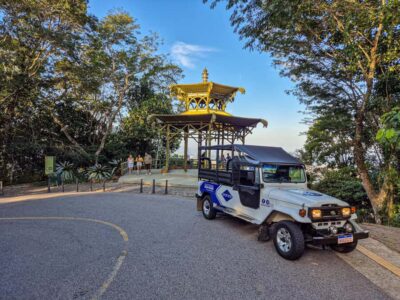
Van or cog railway out of Cosme Velho, twenty minutes up through the rainforest, and the platform at opening while the air over Guanabara is still clear. Most of these fold in the Selarón steps and the cathedral on the way back down. Half a day, and the photograph you came for is already taken by noon.
Compare the Corcovado days →
The cog train
Statue first, sand after
1 day · from $45 · 4,476 reviews
Van or cog railway out of Cosme Velho, twenty minutes up through the rainforest, and the platform at opening while the air over Guanabara is still clear. Most of these fold in the Selarón steps and the cathedral on the way back down. Half a day, and the photograph you came for is already taken by noon.
Compare the Corcovado days →
 Two cable cars
Sunset from Sugarloaf
1 day · from $46 · 2,873 reviews
Up to Morro da Urca first, then the second car across to Pão de Açúcar for the hour when Botafogo switches its lights on and Corcovado turns gold behind you. The queues thin after five. Take a layer; the wind coming off the bay has teeth.
See the Sugarloaf trips →
Two cable cars
Sunset from Sugarloaf
1 day · from $46 · 2,873 reviews
Up to Morro da Urca first, then the second car across to Pão de Açúcar for the hour when Botafogo switches its lights on and Corcovado turns gold behind you. The queues thin after five. Take a layer; the wind coming off the bay has teeth.
See the Sugarloaf trips →
 Both peaks, one day
The whole skyline at once
90 - 150 minutes · from $27 · 520 reviews
One driver, one ticket, both summits plus Maracanã and the Sambadrome in between. You will not linger anywhere, but three-night visitors get the entire postcard done before dinner and keep the rest of the trip for the beach.
See the full-day city tours →
Both peaks, one day
The whole skyline at once
90 - 150 minutes · from $27 · 520 reviews
One driver, one ticket, both summits plus Maracanã and the Sambadrome in between. You will not linger anywhere, but three-night visitors get the entire postcard done before dinner and keep the rest of the trip for the beach.
See the full-day city tours →
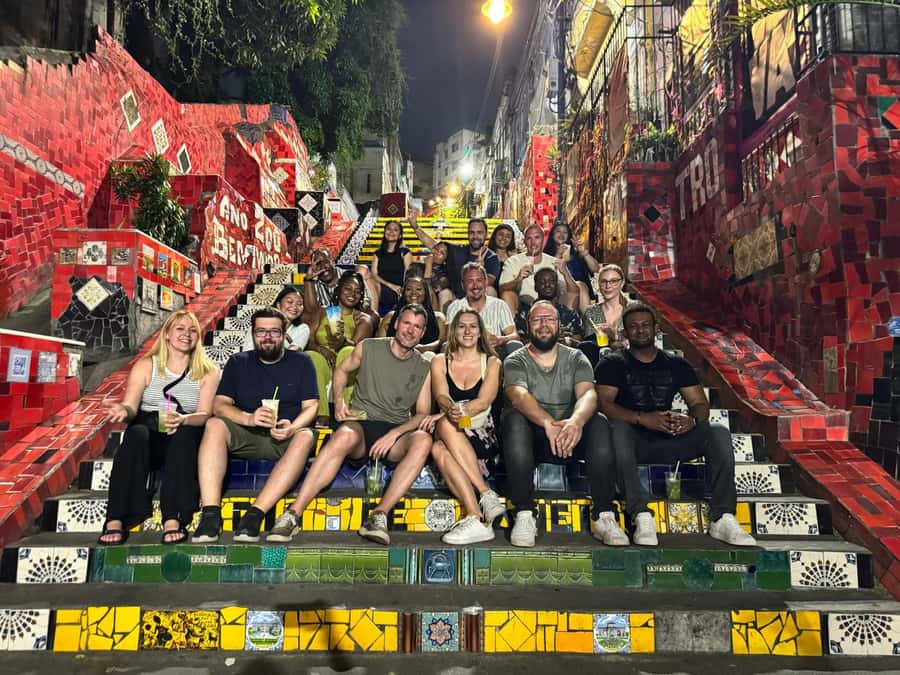
Friday belongs to the arches.
Under the Arcos da Lapa the samba comes out of open doors and the street bars stack three deep by eleven. A guide gets you past the cover charge, into the rodas that only start once the tourists have gone, and back to Copacabana at the end of it.
The bay is the best road in Rio.
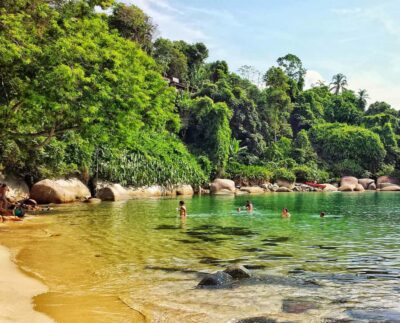
A schooner out of Urca, a speedboat rounding the islands of Guanabara, an afternoon under sail that finishes with a cold Antarctica at the marina. Three hours on the water rearranges how the city looks from land.


Rocinha and Vidigal, walked properly.
The community walks worth your money are run by people who live on the hill: the moto-taxi to the top, the view from Vidigal that beats anything you paid for, and the fee staying where it was earned.


Colonial Rio is still standing downtown.
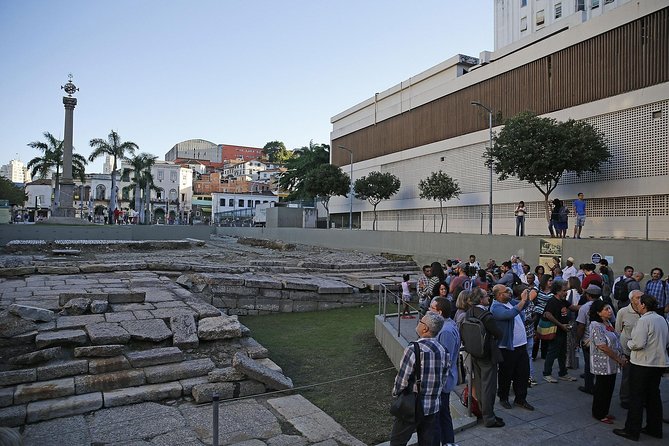
Behind the bank towers of Centro there is a 1750s aqueduct carrying a tram up to Santa Teresa, a monastery lined floor to ceiling in gold leaf, and Praça XV where the court landed in 1808. It takes half a day on foot with somebody who knows which doors open.
Rio is a chain of bairros.
Copacabana for the morning swim. Ipanema for the applause at Arpoador. Lapa once the arches light up. Santa Teresa for the tram, the tiles and the long walk down.


Sorted by what you feel like doing.
Twelve ways into the same city: on foot, on a boat, up a rock face, hanging off a nylon wing, or under the arches long after midnight.




The coast road pays off.
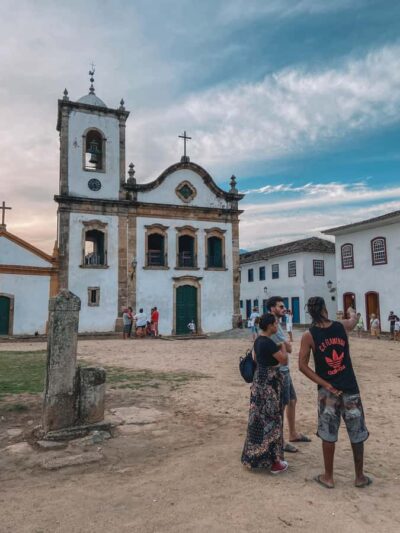
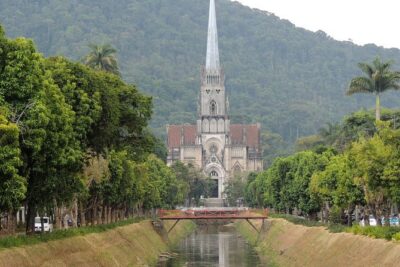
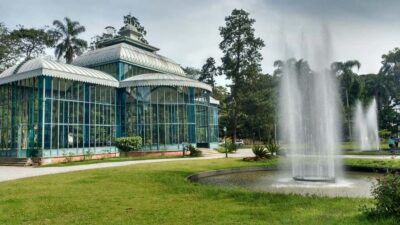
Two hours east and the water turns Caribbean at Arraial do Cabo. Four hours west and Paraty’s cobbles flood on a full moon. Petrópolis keeps the emperor’s summer palace an hour up the mountain, ten degrees cooler.


A first Rio, in the right order.
Nobody sees all of Rio in one visit, but three days is enough to get the shape of it. This is the sequence that works with the light, the queues and the heat.
Day 1
Up Corcovado early
First train out of Cosme Velho while the bay is still sharp, the Selarón steps on the way back down, then an afternoon that asks nothing of you but a towel on Copacabana.
Plan day one →
Day 2
Bay day, then Sugarloaf
A schooner out of Urca or a speedboat around the Guanabara islands, lunch at the marina, then both cable cars timed for the moment the city turns its lights on.
Plan day two →
Day 3
The hills, then the arches
A morning on Rocinha or Vidigal with a guide who lives there, an afternoon of tiles and tram tracks in Santa Teresa, and samba under the Lapa arches to close it out.
Plan day three →
Latest Rio de Janeiro tour reviews.
 ★ 5.0Unforgettable Boat PartyFrom $473 reviews
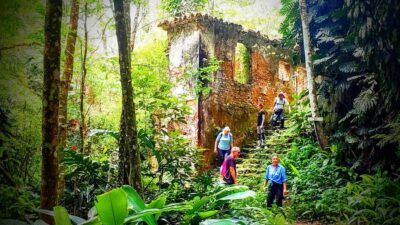
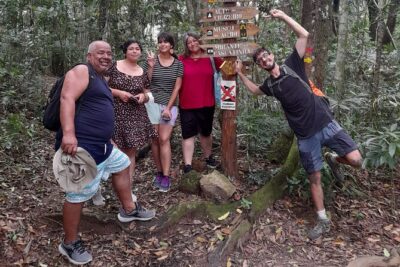 ★ 5.0Tijuca National Park and all its wonders!From $513 reviews
 ★ 5.0Private Sugar Loaf with fast pass ticket and Hotel Pick upFrom $1604 reviews
 ★ 3.8Rocinha Jeep Tour: A Journey into the Soul of the Favela!From $863 reviews
 ★ 4.7Rio: Favela Walking Tour of Rocinha with a Resident GuideFrom $1063 reviews
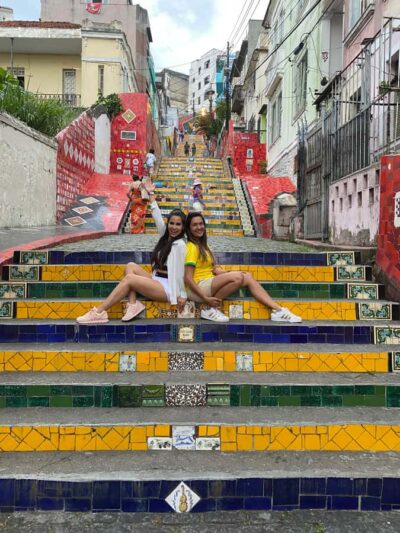 ★ 5.0Rio: Private, Custom express, Main Attractions!From $1603 reviews
 ★ 3.7Rio: Museum of Tomorrow, Yup Star & Olympic BoulevardFrom $913 reviews
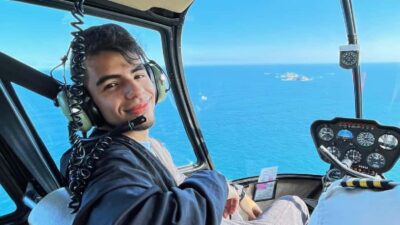
 ★ 4.4Rio de Janeiro by Air: 10-Minute Helicopter TourFrom $2973 reviews