
Review · TIJUCA NATIONAL PARK TOURS
Jeep Adventure: Guided Tour through Tijuca Rain Forest
Rainforest views beat a beach day.
This Jeep Adventure through Tijuca National Park is built for photos and easy nature time, with a guided walk to the Cachoeira dos Macacos area and multiple viewpoint stops over Rio. I like that the pacing stays relaxed, yet you still get real context about how the Mata Atlântica ecosystem was restored.
Two big wins for me: roundtrip hotel pickup from many Rio neighborhoods (so you lose less time wrangling transport), and the chance to learn what you’re actually seeing, from plants and wildlife to reforestation efforts that shaped the forest’s recovery. One thing to weigh: animal spotting is never guaranteed, and the tour schedule has one key limitation, Vista Chinesa is not visited on Saturdays, Sundays, and holidays.
Key things I’d plan around
- Open-top Jeep ride plus short, gentle hiking keeps this doable even if you are not a hardcore hiker
- Cachoeira dos Macacos area is the main nature payoff, with time on a gradual trail and waterfall views
- Big photo viewpoints at Vista Chinesa, Emperor’s Table, and Mayrink Chapel give you Rio skyline moments from the trees
- Local guide focus on Mata Atlântica means you are not just looking, you are learning
- Small group size (max 20) tends to make stops smoother and Q and A easier
- Bring a water bottle and sun protection since you will be outdoors for the whole stretch
From Rio Pickup to the Jeep: The Start That Actually Saves Time
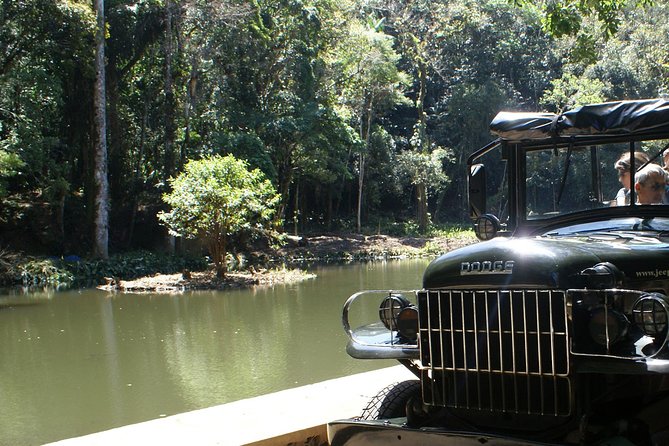
This tour is one of the easier ways to get from your Rio hotel into Tijuca. You’re picked up from many Downtown and South Zone hotels, and there is also pickup for Barra da Tijuca, so you can choose the option that fits where you are staying. Then you meet your guide and step into an open-top Jeep, fasten your seatbelt, and head toward the forest.
That short drive matters. Tijuca National Park sits just about ten minutes outside the city center, so you are trading traffic and long transit for actual trail time. Along the way, your guide frames the setting as more than a scenic escape, explaining why the Mata Atlântica matters and how it fits into a broader protected reserve across Brazil.
If you are doing a busy itinerary, I like that the total time is about four hours. It feels like a half-day commitment with a lot of payoff: viewpoints, waterfall time, and a guided nature and history lesson without a full day disappearing.
Tijuca National Park Visitor Center: Where the Story Begins
Before you start walking, you get a quick stop at the Tijuca National Park Visitor Center. It’s only around 15 minutes, but it sets you up to notice details later. Think of it as the shortcut to understanding what makes this forest different from a generic jungle.
The guide builds from there, tying the forest to reforestation in Tijuca National Park and to the wider Mata Biosphere idea across 14 states. Even if you are not a science person, the point is practical: the guide helps you read the forest like a living system.
In the field, this kind of context can turn the trip from pretty to memorable. You start to connect plant types to what animals might do in the area, and you listen differently for bird calls and animal movement.
The Gentle Hike: Cascatinha Taunay and the Real Rainforest Feeling
Once you reach the forest, you disembark and do an easy hike that typically lasts 15 to 30 minutes on a gradual trail. This is not a sweaty ascent, and you do not need climbing gear. It’s a walk designed for comfort and observation, with your guide leading so you do not wander.
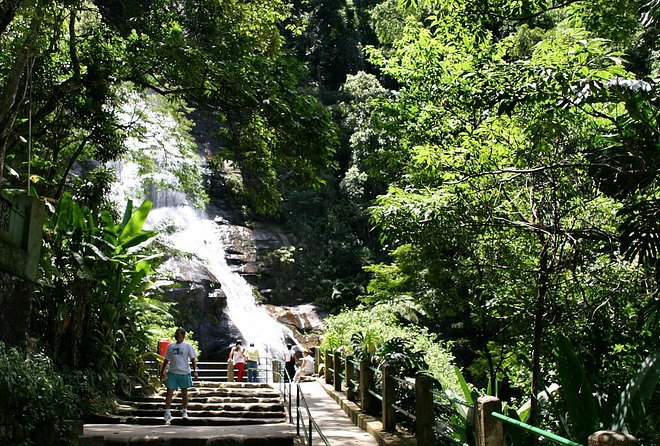
Along the way, you visit Cascatinha Taunay, a set of waterfall scenery where the forest feels up close. This is the portion that makes Tijuca worth it, because the canopy changes the air and sound in a way you do not get from a lookout platform. You can also expect a chance at wildlife spotting.
From guides and drivers named in past groups, I’ve seen the same pattern: they point out small things most people miss. In Rio’s green spaces, a “small” animal is often the highlight, like a coati sighting, a vulture overhead, or quick flashes of birdlife. One guide even tied together what you hear with what you might spot, like explaining animal noises so you know what to look for.
If you care about photos, this is also where your camera gets honest value. Waterfall areas give you natural textures, mist, and layers of greenery.
Emperor’s Table: City Views at 487 Meters
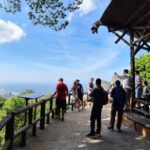
After the short waterfall time, you get a viewpoint break at Emperor’s Table. It’s around 487 meters above sea level, and you feel that height because the city opens up between the trees.
What makes this stop more interesting than just another overlook is the history angle. This is where Dom Pedro I would leave Quinta da Boa Vista with his cart to reach the Estrada da Vista China area for a meal while looking out over the city. Even if you do not go deep on the royal story, it adds meaning to the view.
There are stairs around the parapet, and you move close enough to the edge that Rio looks like it’s right under you. In practice, that makes it a great photo moment: you get skyline angles without having to fight crowds on the most famous viewpoints.
Practical tip: bring your sunglasses and treat this as a photo stop, not a long sit-down. The time window is short, and you want to be ready when the light hits.
Mayrink Chapel: A Pink Interruption in the Forest
Next comes Capela Mayrink, a small chapel set inside Tijuca Forest at about 460 meters. The chapel is often described as resembling a child’s history house, and it really does look out of place in the best way: pink walls, forest around it, and a calm stop that breaks the “only nature” rhythm.
It was erected in 1860 by a Portuguese banker, Viscount de Souto, inside his farm in Tijuca. The altar area includes reproductions of panels with religious imagery by Cândido Portinari. The gardens and surrounding elements were designed by Roberto Burle Marx, which gives the stop a second layer, design as well as spirituality.
This is a five-minute style moment. You will not spend an hour here, but it can be a highlight if you like human stories inside natural places. It also gives you a different kind of photo than the skyline and waterfalls do.
If you want quick variety, this stop is doing its job.
Vista Chinesa: The Big Panorama, Plus a Weekend Limitation
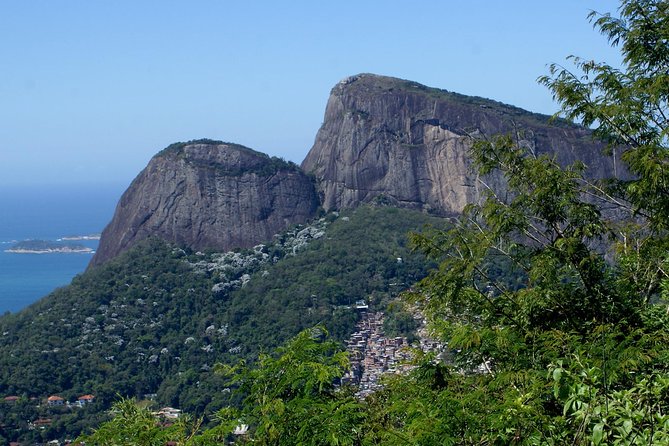
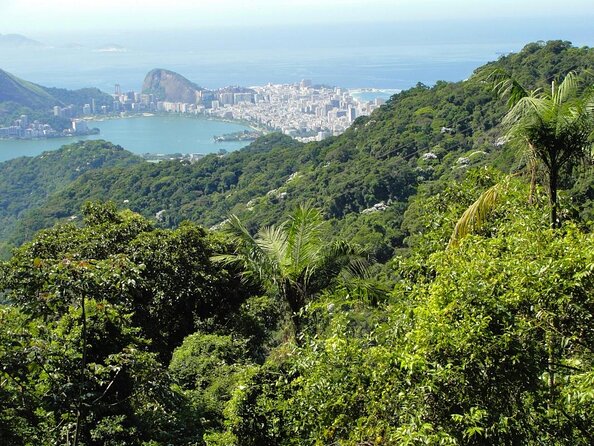
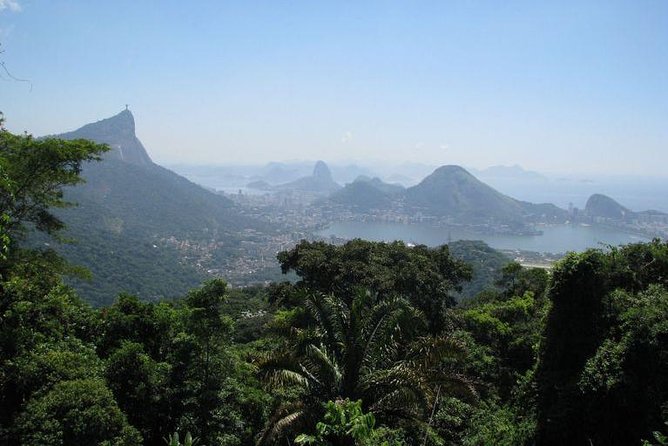
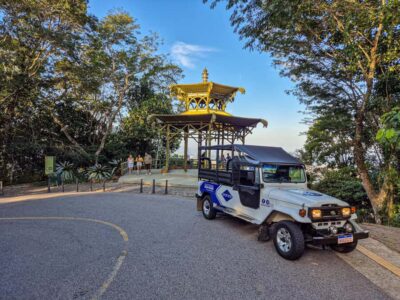
Then you move to Vista Chinesa, the Chinese View lookout. This is one of the main panoramic stops, with sweeping sights over Ipanema and Copacabana beaches and the Guanabara Bay area, and on clearer days you might even see as far as Niterói.
Vista Chinesa matters for two reasons. First, it’s high enough to feel like you’ve popped above the forest. Second, the lookout itself has a story: it was built between 1902 and 1906, and the oriental-style pagoda is linked to Chinese tea cultivation connections in Brazil in the early 19th century.
Here’s the catch you need to plan around. Due to forest regulations, it is not possible to visit Vista Chinesa on Saturdays, Sundays, and holidays. If your trip lands on a weekend, assume this stop may not happen even if the rest of the day does.
I’d treat Vista Chinesa as the “if it’s available, grab it” moment. If it’s not, you are still getting Emperor’s Table and other forest walk time, but your skyline photo options will be different.
Cachoeira dos Primatas (Cachoeira dos Macacos): Waterfall Time and Wildlife Hope
The tour’s nature payoff is the waterfall area tied to Cachoeira dos Macacos, sometimes referred to in this itinerary as Cachoeira dos Primatas. You should expect waterfall viewing paired with your guided hike time.
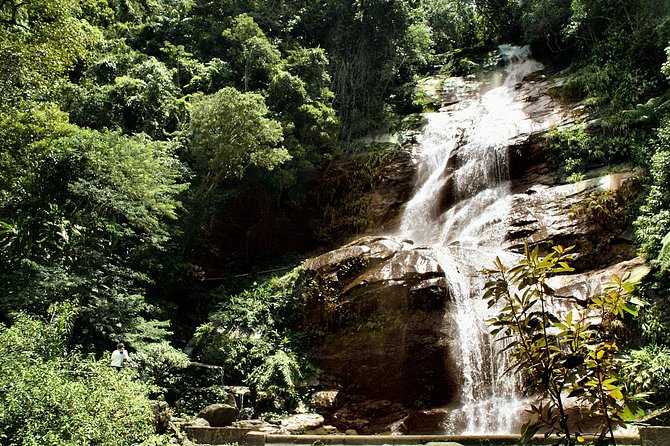
This is where the rainforest shifts from “pretty greenery” to something you can feel. Water sounds are louder here, and the air often seems cooler. You get short photo opportunities too, and you are set up to look for wildlife.
What can you actually spot? Your guide may help you look, and the highlight language often includes sloths, monkeys, butterflies, and birds. From real experiences shared by people on the tour, sightings have ranged from coatis and raccoons to hummingbirds and even fish visibility in certain spots. But keep it honest: animals move, and weather changes what you can see.
So I suggest you go for the forest experience first. If animals show up, it’s a bonus. If they do not, you still have a waterfall walk and the skyline viewpoints.
Your Guide and Group Size: Why Names Matter on This Tour
One theme that comes up again and again is that the guide can make or break the feeling of the day. This is not a script tour where everyone just follows in silence.
Different guides have been praised by name in past groups, including Eddie, Everton, George, Andrea, Lucy Morozini, Myriam, Mario, and others. The consistent message is that the guide explains local flora and fauna in a way you can use, and also gives time for pictures instead of rushing you through every stop.
Also, the group size is capped at 20 travelers. In practical terms, that usually means you get more space at lookouts and easier listening during explanations, especially when you’re stopping often.
Is $88.21 Worth It for a 4-Hour Tijuca Jeep Tour?
At $88.21 per person for about four hours, the value here is in what’s bundled. You are not just paying for a ride; you are paying for:
- Jeep transport into and around the forest area
- Eco hike time on a gradual trail
- Hotel pickup and drop-off from many neighborhoods in Rio
- Park entry included for key stops (Visitor Center and major viewpoints)
That matters because in Rio, transport and entry fees can add up fast if you plan it yourself. A guided option like this can be cheaper than cobbling together separate transport plus multiple entry tickets plus a private guide, especially if you want multilingual support.
The one value mismatch I would watch for is expectations around animals. If you are arriving thinking this is a jeep safari-style hunt for sloths and monkeys, the pacing here is more nature-walk and viewpoint focused. You might see animals, but you should not count on a parade of wildlife. The forest itself is the constant.
What to Wear and Bring So the Day Feels Easy
This is an outdoor half-day, so treat it like one. You’ll want comfortable clothing and shoes for walking on forest paths. Bring sunscreen, sunglasses, and a hat, because even if it’s green, the sun can still hit hard.
Bring a bottle of water too. Food and drinks are not included, so you may want to carry a small snack if you get hungry before or after. The schedule has short stops, but you will still be outdoors long enough to feel it.
Also, keep a flexible mindset about weather. One positive experience noted great views even with rainy conditions. Rain can actually make the forest feel more alive, but it might also affect how clear the skyline shots are from the lookouts.
When This Tour Works Best (and When It Might Not)
This tour is a strong fit if you want:
- A short, guided rainforest break from Rio’s city energy
- Photo stops that include skyline views from the forest
- Easy hiking and clear explanations about Mata Atlântica
- Hotel pickup so you can stay relaxed
It might not be your best match if you want a long, rugged trek, or if you expect frequent animal sightings as a primary guarantee. The route is planned around reforestation and rainforest interpretation, plus waterfall and viewpoints, not animal tracking all day.
If you are traveling as a couple, it’s great because the time stays manageable and the scenery gives you variety. Solo travelers often like it too because you are not stuck figuring out transport, and guides typically help with photo timing.
Should You Book This Jeep Adventure in Tijuca?
Yes, if you want an easy-to-manage way to see why Tijuca National Park is one of Rio’s most important nature stops. The combination of open-top Jeep transport, an eco walk, and major viewpoints makes this a smart use of a half-day. The guides, including praised names like Eddie, Everton, George, Andrea, and Lucy Morozini, tend to add real clarity, not just narration.
I’d book it especially if you are staying in Rio Downtown or the South Zone and you want to save time with pickup. Just do two things before you go: confirm your pickup spot with the operator so you do not lose time, and remember that Vista Chinesa is skipped on Saturdays, Sundays, and holidays.
If you want a rainforest day that is part scenery, part learning, and part a little waterfall magic, this tour fits the bill.
FAQ
How long is the Jeep Adventure in Tijuca Rain Forest?
It runs about 4 hours total.
Does the price include hotel pickup and drop-off?
Yes. Roundtrip transport is included from selected hotels in Rio, including the Downtown and South Zone areas, with pickup also available for Barra da Tijuca.
Is admission to Tijuca National Park included?
Yes. Admission tickets are included for the park-related stops listed in the itinerary, such as Parque Nacional da Tijuca, the Visitor Center, and key viewpoint and waterfall stops.
Can I visit Vista Chinesa on weekends?
No. Vista Chinesa cannot be visited on Saturdays, Sundays, and holidays due to forest regulations.
How much walking is involved?
You’ll do an easy hike on a gradual trail for about 15 to 30 minutes, plus shorter walking portions at specific stops.
What languages are available, and should I bring food?
Languages available include English, Spanish, German, Italian, French, and Portuguese. Food and drinks are not included, so you should bring water and plan for your own snacks if needed.
More Tour Reviews in Rio de Janeiro






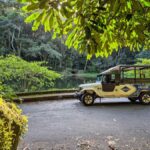
Open Jeeps Through the Forest


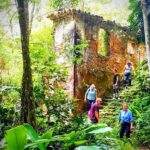
Further Into Tijuca Forest



Tijuca National Park Tours, compared.
 ★ 4.7Christ, Selaron Steps, and Tijuca Park TourFrom $68857 reviews
 ★ 4.3Guided Jeep Tour through Tijuca RainforestFrom $90740 reviews
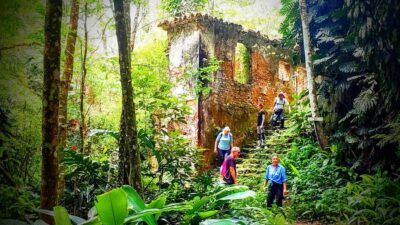 ★ 4.9Rio: Tijuca Forest Small Group Hike to Caves and WaterfallsFrom $69536 reviews
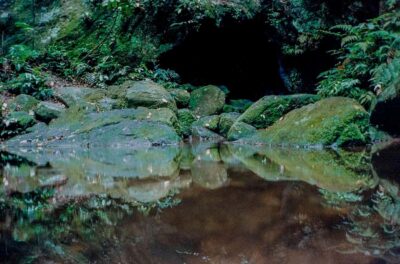 ★ 4.5Rio: Half-Day Jeep Tour at Floresta da TijucaFrom $60353 reviews
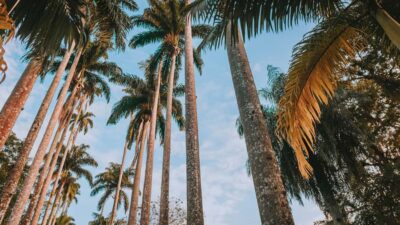 ★ 4.34-Hour Botanical Garden & Tijuca Forest TourFrom $51275 reviews
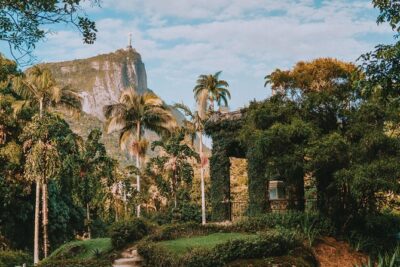 ★ 4.5Rio de Janeiro Botanical Garden & Tijuca Forest TourFrom $55168 reviews
 ★ 4.9Tijuca Forest Challenge Hike Full-Day TripFrom $86163 reviews
 ★ 4.2Jeep Tour in the Tijuca ForestFrom $82108 reviews
Also filed under