
Review · RIO SAMBA NIGHTS & CARNIVAL SHOWS
Rio de Janeiro: Bossa Nova Walking Tour with Guide
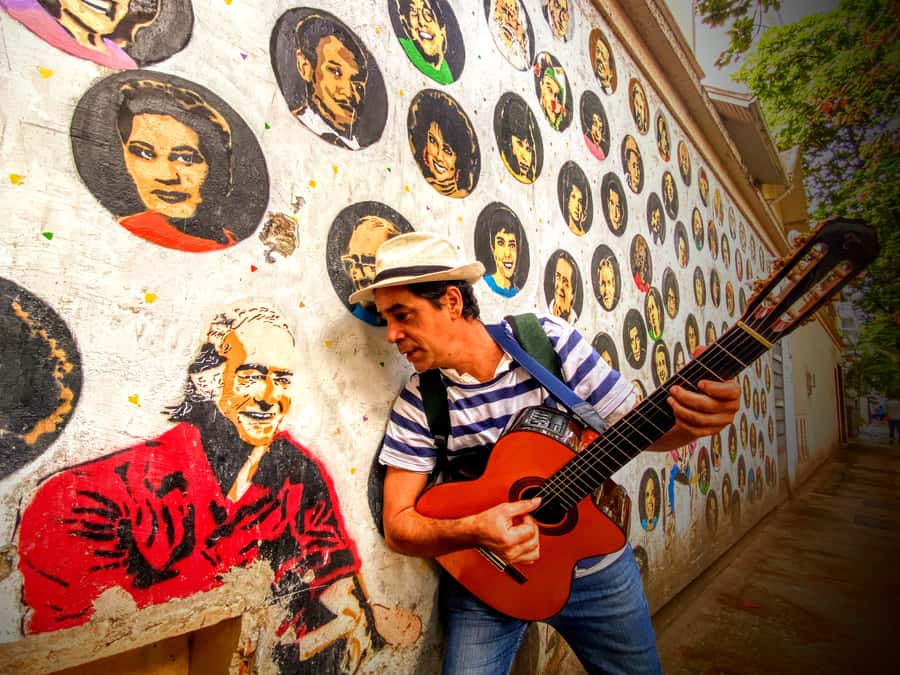
Rio sounds like music, and this tour proves it. You’ll walk the Copacabana to Ipanema stretch while a guide-musician connects street corners to bossa nova’s golden 50s to 60s vibe. I love the mix of history and actual performance, not just facts on a sidewalk.
What I like most is the guide who plays while telling the story, so the music lands where it was created and lived. I also like how the route hits real landmarks and public squares, from Dorival Caymmi to Tom Jobim statues. One possible drawback: parts of the walk are short photo stops, so if you want nonstop live songs, plan for moments where the walking and narration take the lead.
Key things to know before you go
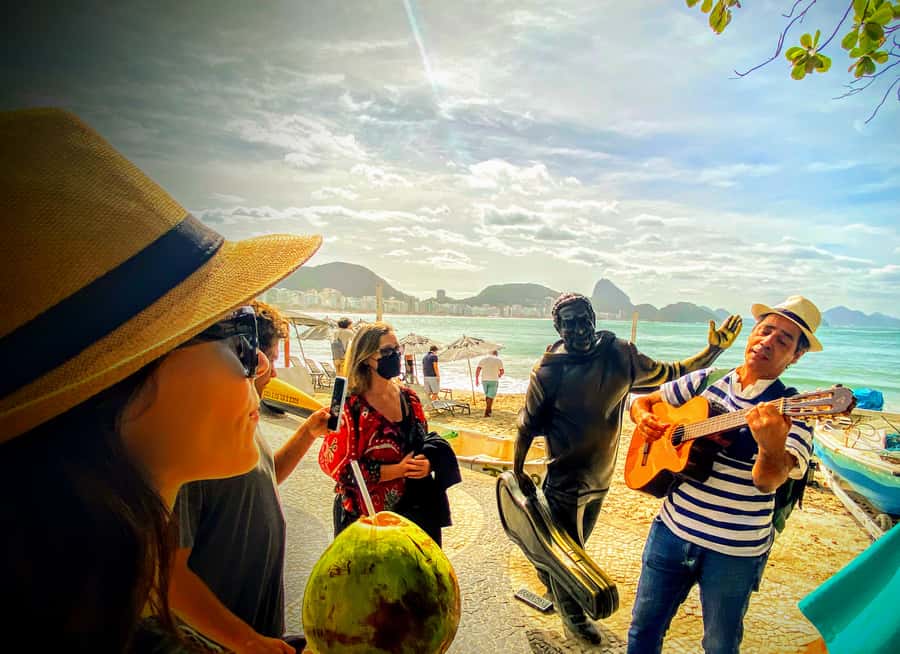
- Musician-guide format: the same person tells the story and plays music along the way
- Live performance included: you hear bossa nova, not just read about it
- 10-plus stops across Ipanema and Copacabana: beaches, bars, streets, and key viewpoints
- Legendary names in context: Tom Jobim and Vinícius de Moraes are part of the route’s explanations
- Portuguese, Spanish, English: you should find a language that works for you
- Short-and-scenic timing: many stops are brief, built for pacing over performances
Why bossa nova belongs on your Ipanema and Copacabana walk
Bossa nova is one of those Rio ideas that feels bigger than Rio, yet it is deeply local. This tour treats it like street culture, not a museum subject, and that is a big part of why it works. You do not just learn about the style, you see where the mood came from: the beaches, the squares, the everyday rhythm of the neighborhood.
I also like that the tour aims at curiosity. You get stories and curiosities about how the style started, who drove it, and how those songs turned into Rio’s calling card. If you already know a few tracks, you’ll recognize the themes faster because you’re hearing the context as you walk.
One small reality check: this is a walking circuit, so you’ll be on your feet the whole time. The route includes photo moments and scenic viewing points, but it still moves at a guided-tour pace.
Meeting at Praça Nossa Senhora da Paz, and how to start on time
You start at Praça Nossa Senhora da Paz in Ipanema, near exit A of the metro. That’s helpful because you’re not forced to guess complicated meeting spots far from transit. The night before, you’ll get an email at 20:00 with the exact location inside the square and guidance to find your guide.
Plan to arrive a few minutes early. In a tour like this, the first segment sets the rhythm, and you want to be there for it. Also, wear shoes you can walk in comfortably. The tour is built around a steady pedestrian pace for about three hours.
If you’re traveling with limited mobility, you should know this one is not suitable for wheelchair users or people with mobility impairments, and it’s also not for kids under 8. The tour is designed for strolling between stops.
What makes the guide-musician setup worth it
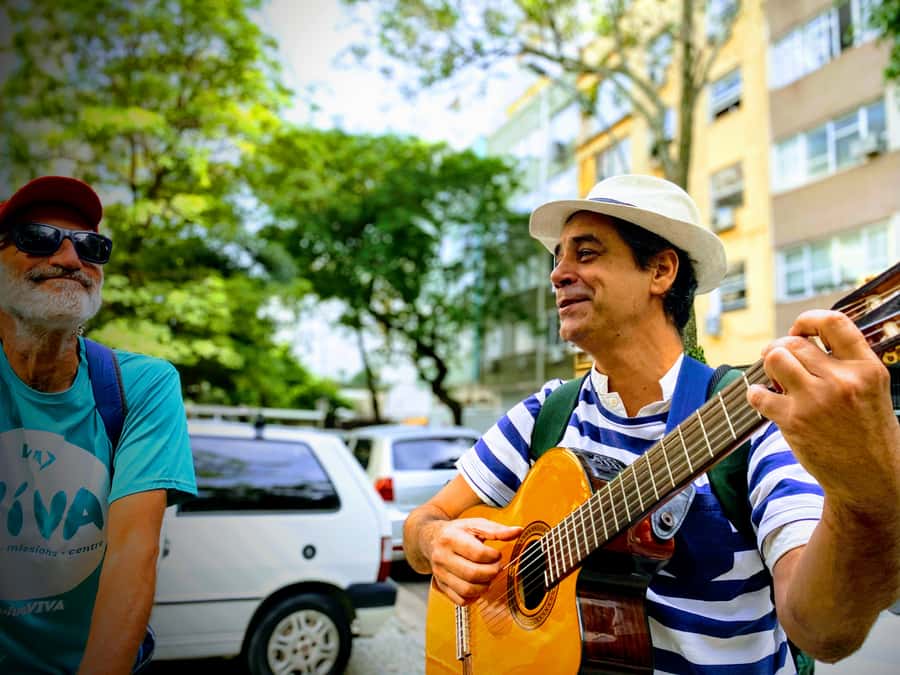
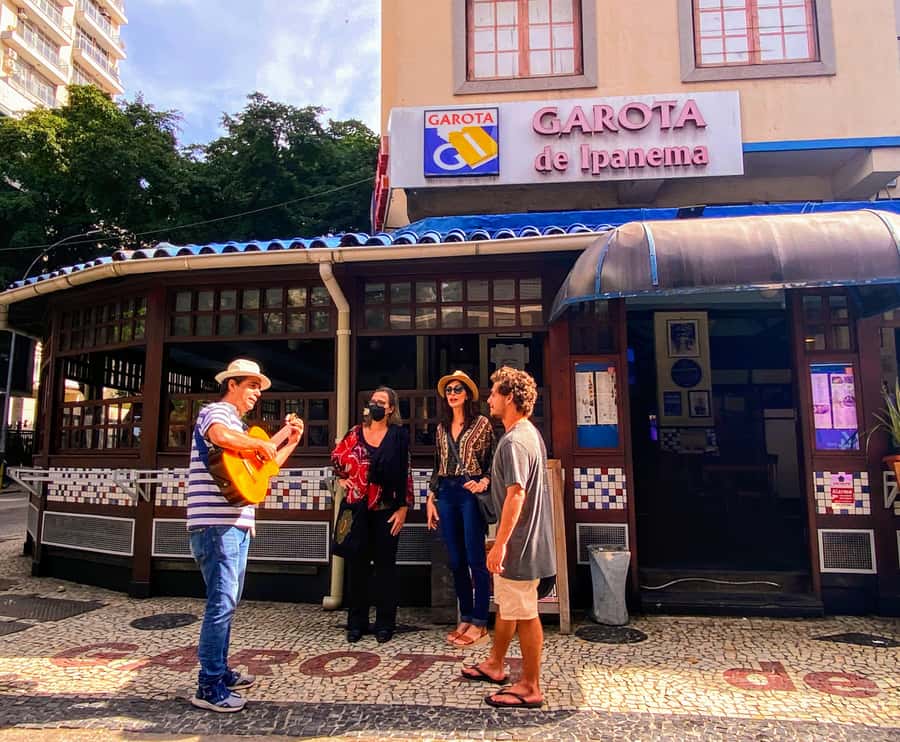
Many tours have a guide. This one has a musician-guide, and it changes the whole feel. Your guide is also a singer and plays guitar and some other instruments along the way, which turns the stories into something you can hear as you go.
In particular, one guest highlighted the guide as Guilherme, praising how he brought the history of bossa nova to life and sounded like a person you’d happily hang out with. Another guest used the shorter name Gui and called the guide amazing, again pointing to the same mix of storytelling plus performance. That matches what the tour is promising: music plus explanation, delivered by the same person.
Language is another practical plus. The tour runs in Portuguese, Spanish, and English, so you’re more likely to get the full thread of the story rather than just the general mood.
Stop-by-stop: how the route traces bossa nova in real places
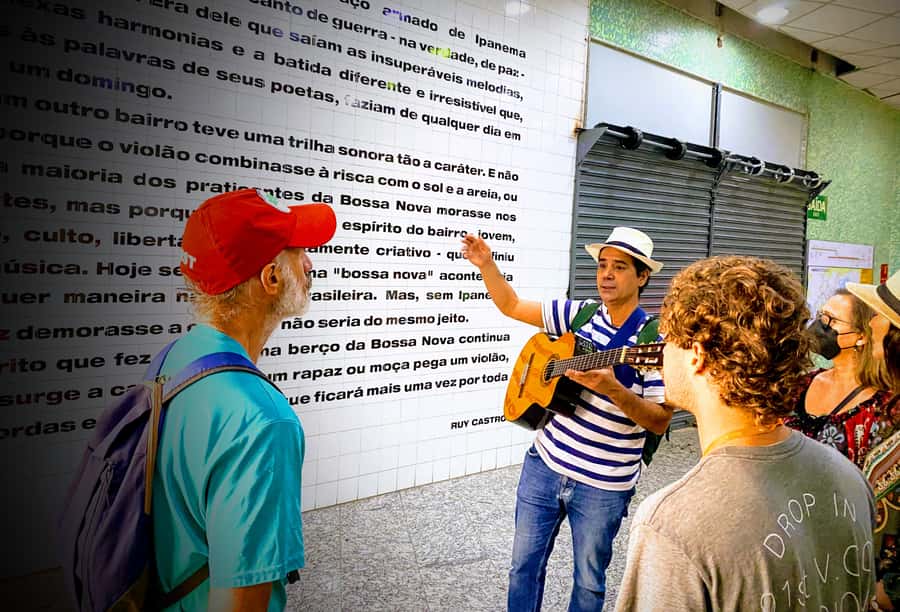
The tour’s core idea is simple: follow the geography of Ipanema and Copacabana and connect it to the people and songs you associate with bossa nova. You’ll visit around 10 different spots, and the route is built from squares, streets, beach areas, statues, a cultural stop, and a local bar.
Praça Nossa Senhora da Paz: the launch point and a first lesson
You begin at Praça Nossa Senhora da Paz and spend about 20 minutes with an initial class-style introduction. This is where you get the quick map of what you’re about to see: what bossa nova is, what makes it distinctive, and why Rio’s neighborhood layout matters to the music’s sound and culture.
If you arrive on time, this segment helps you later because you’ll recognize names and themes as they appear around you.
The first photo stops and street stories
Next, you move through several short stops designed for sightseeing, guided narration, and quick photo moments, including a “hidden gem” style spot and another photo stop on Rua Nascimento Silva. You’ll also hit a secret stop and a viewpoint area at Cantagalo.
What makes these short segments work is that they keep the pace moving while still giving you meaning. When the guide talks about where musicians lived, played, or created music, those street corners stop being generic.
The tradeoff is time. Each of these stops is around 15 minutes, which means you won’t linger long enough for a deep, repeatable exploration. You’re meant to keep walking, keep listening, and keep collecting impressions.
Praça General Osório and Av. Atlântica: squares and the sea-view rhythm
From Cantagalo, you reach Praça General Osório. This is the kind of plaza where you can pause, look around, and let the guide’s timeline take shape. Then you head to Av. Atlântica, specifically Av. Atlântica 3968, for another scenic viewing-style stop.
Why these matter: bossa nova lives in the overlap between city life and ocean atmosphere. The route uses squares and beachfront streets to make that overlap tangible.
Dorival Caymmi statue to Garota de Ipanema: turning landmarks into music context
One of the most story-friendly moments is the stop at Estátua de Dorival Caymmi. Caymmi is tied to the broader Brazilian musical world around this era, and placing his statue mid-walk gives you a bridge from bossa nova’s adjacent roots to the specific figures you’ll hear about.
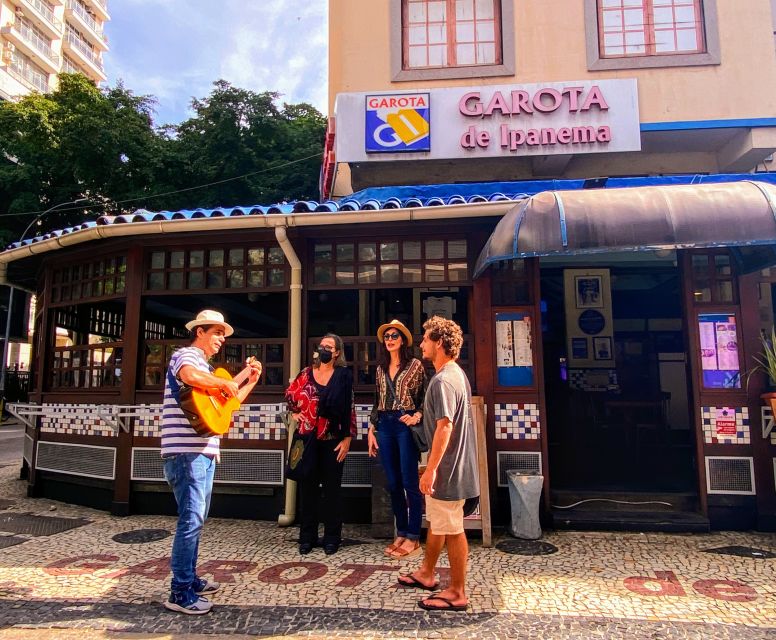
Then you reach Garota de Ipanema, the famous spot linked to the song’s identity. You also pass by Arpoador, another classic Ipanema viewpoint area that helps reinforce the beach setting behind the sound.
Here’s the practical value: you’re not only seeing “pretty Rio.” You’re seeing the exact kind of public space where songs became shared references.
Tom Jobim statue and Casa de Cultura Laura Alvim: where the names feel closer
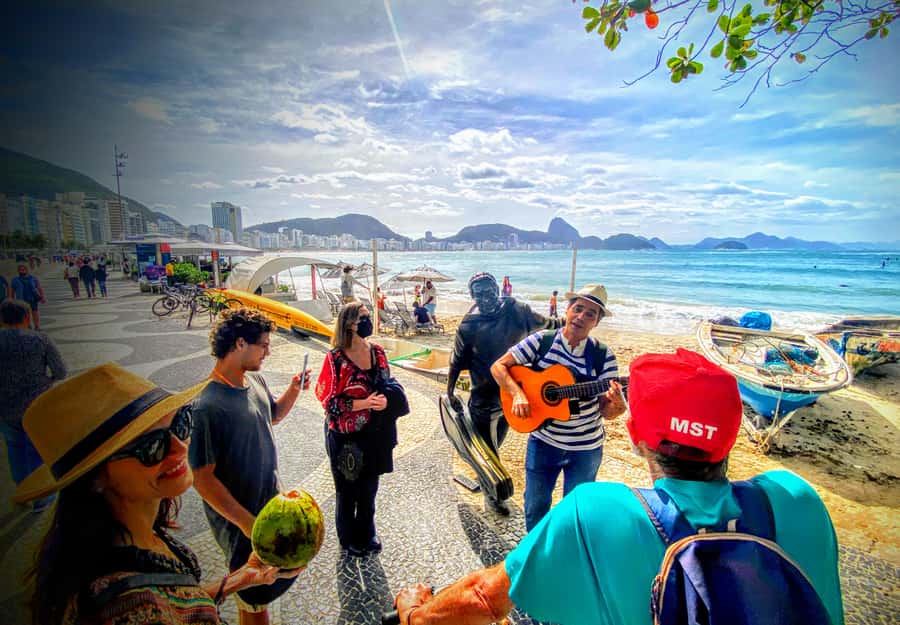
After the Garota de Ipanema and Arpoador moments, the tour shifts into a more direct “composer trail.” You visit the Estátua de Tom Jobim, which is a clear anchor for the bossa nova story since Tom Jobim is one of the key names constantly associated with the genre.
Right after that, there’s a brief stop at Casa de Cultura Laura Alvim. This is short on time, around five minutes, so think of it as a quick culture pause rather than a long visit. Still, it adds local texture so you feel like you’re moving through community spaces, not just scanning postcard viewpoints.
A local bar and the finish at Restaurante e Bar Garota de Ipanema
The last part of the walk includes a local bar stop, with another photo moment and a performance element. You then finish at Restaurante e Bar Garota de Ipanema.
This ending matters because it brings you from outdoors into a music-adjacent setting. It’s also a nice option if you want to keep the mood going after the tour without figuring out your own night plan.
One watch-out: the live performance is included, but the tour format includes multiple short stops. That works for most people, especially first-time visitors who want a guided tour feel. If you’re a die-hard fan who wants maximum playing time, keep expectations realistic: it’s performance plus walking, not a concert-only schedule.
The live bossa nova performance: what it’s like in practice
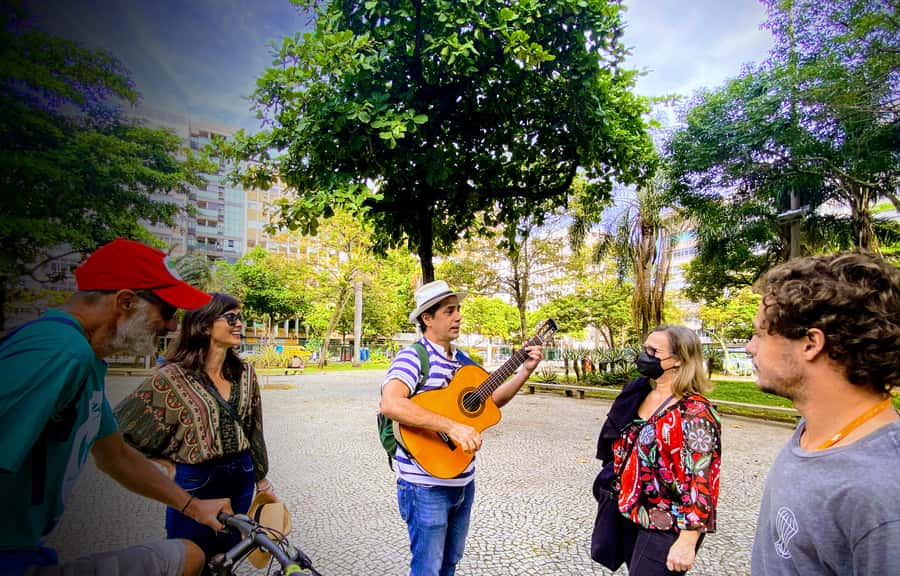
The tour includes a live performance by the musician guide. In other words, you’re hearing the style while you’re physically in the neighborhood the guide is describing.
From the experience described by guests, the performance part is a standout because it makes the history easier to hold onto. One review praised the guide-musician as a one-person engine of story plus songs. Another review noted that it was interesting but wished there was more music, which is a helpful heads-up.
So if you’re choosing this tour primarily for bossa nova audio, go in expecting music at key moments, not a nonstop set. You’ll still get the core idea: bossa nova as a living street sound.
Price and value: is $49 reasonable for three hours?
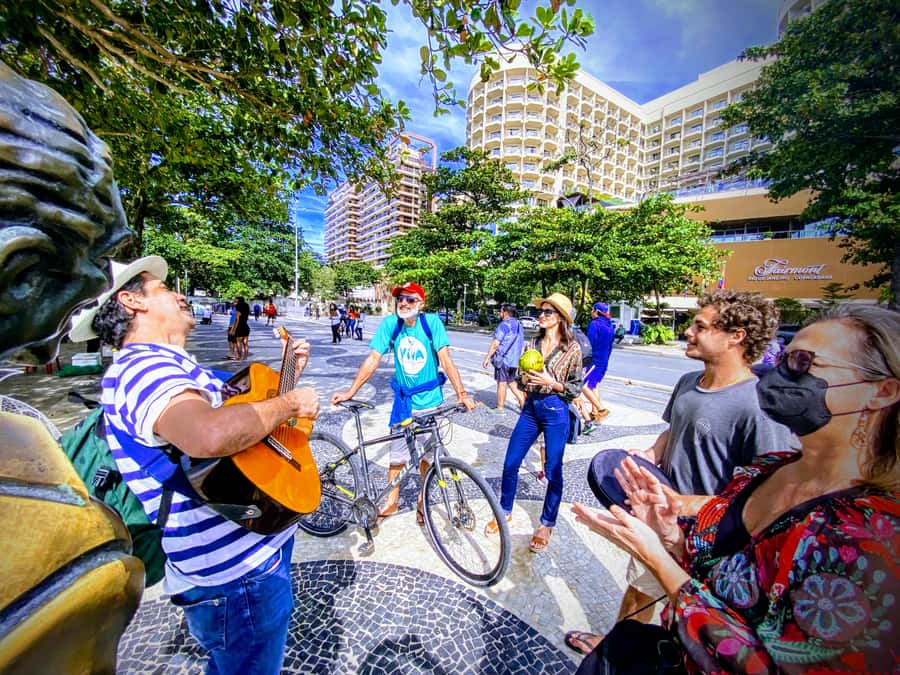
At $49 per person for about three hours, the price can make sense because the tour includes more than narration. You’re paying for a guided walking route through about 10 locations, plus a live musician performance.
Also, you’re not just consuming content. You’re walking a structured loop, and the guide provides context tied to specific public places and names. That kind of “story with location” costs more than a basic city walk because it includes both expertise and instruments.
The tradeoff is what’s not included. Food and drinks are not included, and transport is not included. That means you’ll want to budget a meal or plan snacks separately if you’re doing this as part of a longer day.
For first-time Rio visitors, couples, and music lovers who want a neighborhood story with real sound, $49 feels like a fair bargain. For people who only want a long concert experience, it might feel short, since the tour includes walking and multiple quick stops.
Who should book this tour, and who should skip it
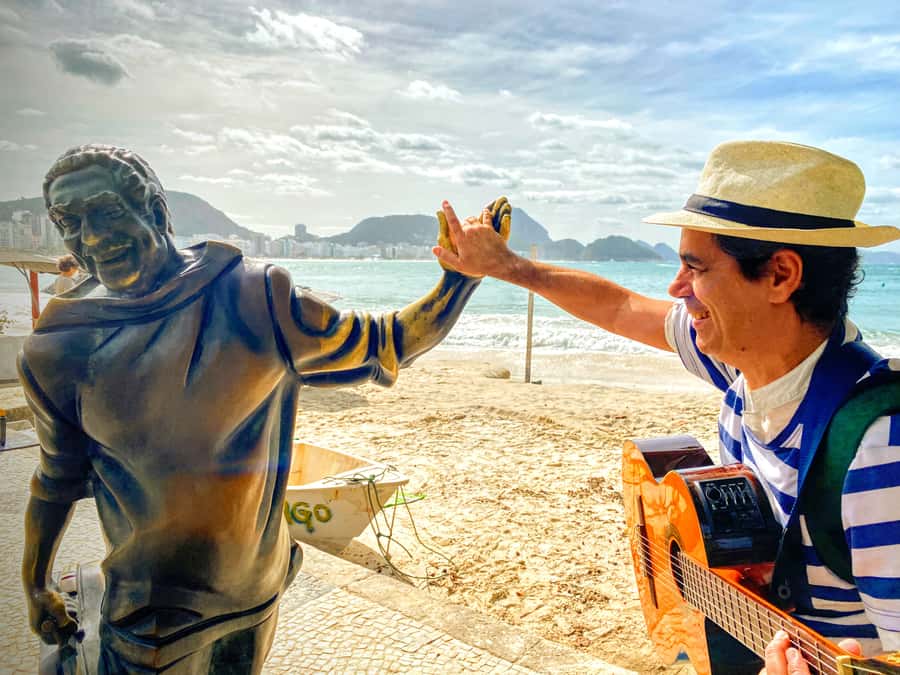
This tour is a great fit if you:
- Enjoy walking tours that connect culture to real places
- Want bossa nova history explained by someone who can also play
- Prefer small or private group formats (since the tour offers both options)
- Speak Portuguese, Spanish, or English, since the tour runs in those languages
It’s not a great fit if you:
- Need wheelchair access or have mobility limitations, since it is listed as not suitable for those needs
- Are traveling with children under 8
- Want only long musical performances with minimal walking
One more practical note: bring comfortable shoes and comfortable clothes. That’s not just advice, it’s basically the main “gear” requirement for a three-hour walking circuit.
Practical tips to make the walk easier
Start with the basics: comfortable shoes, comfortable clothes. The tour lasts around three hours and is built around frequent getting-on-the-move moments between stops.
Next, plan your arrival around the meeting point details. The meeting is at Praça Nossa Senhora da Paz near metro exit A, and the night before you’ll receive an email at 20:00 with exact meeting location instructions.
Finally, if you’re unsure about the language, check that the tour you booked is offered in Portuguese, Spanish, or English. The tour does run in those languages, which helps you avoid losing nuance while listening to music and names.
Should you book this Rio Bossa Nova walking tour?
If you want bossa nova in its natural Rio setting, I think you should book it. The format is made for people who like context, and the fact that the guide is also the musician makes the experience feel more grounded than a typical narration-only tour.
I’d especially recommend it for music lovers who enjoy connecting famous composers like Tom Jobim and Vinícius de Moraes to real neighborhood geography. The route hits recognizable landmarks and public spaces, and the live sound ties the story together.
The decision comes down to your expectations for live music time. If you’re looking for a full-length concert, you may want a different option. If you want a three-hour story-walk with live bossa nova at key moments, this one is strong value for $49.
FAQ
Where is the meeting point?
You meet at Praça Nossa Senhora da Paz in Ipanema, near exit A of the metro station.
What time do I get details about the exact meeting spot?
You receive an email the night before at 20:00 with the exact location in the square and directions to find the guide.
How long is the tour?
The tour lasts 3 hours.
What’s included in the price?
The price includes a guided walking tour and a live performance by the musician.
What is not included?
Food and drinks are not included, and transport is not included.
What languages are available?
The guide offers Portuguese, Spanish, and English.
Is the tour suitable for kids?
It is not suitable for children under 8.
Is it wheelchair accessible?
No. It is not suitable for people with mobility impairments or wheelchair users.
What is the cancellation policy?
You can cancel up to 24 hours in advance for a full refund.
More Tours in Rio De Janeiro






More Tour Reviews in Rio De Janeiro



Rio De Janeiro by the Drumbeat






Rio Samba Nights & Carnival Shows, compared.
 ★ 4.9Beginner Samba Lesson in IpanemaFrom $251,071 reviews
 ★ 4.7Rio: Pub Crawl in Lapa with Cachaça Tasting and Live SambaFrom $33881 reviews
 ★ 4.6Rio: Carnival Backstage Tour at Samba City with CocktailFrom $27520 reviews
 ★ 3.5Hop-ON Hop-OFF Sightseeing Bus in Rio de Janeiro – Rio Samba BusFrom $30457 reviews
 ★ 4.6Samba Class in CopacabanaFrom $25262 reviews
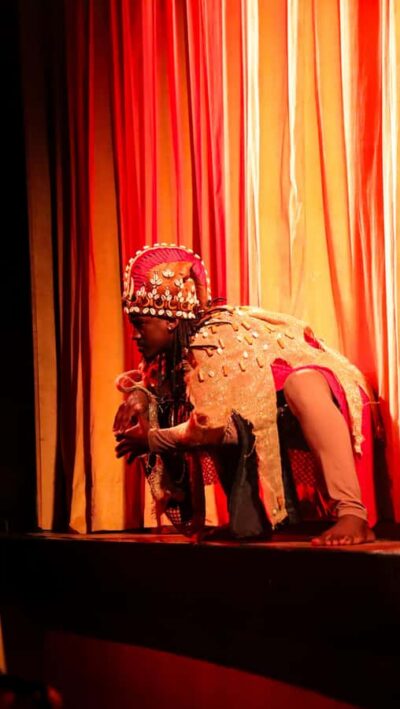 ★ 4.7Rio: Ginga Tropical Samba and Folklore Show TicketFrom $61231 reviews
 ★ 4.5Ginga Tropical – Brazilian Samba and Folklore ShowFrom $65216 reviews
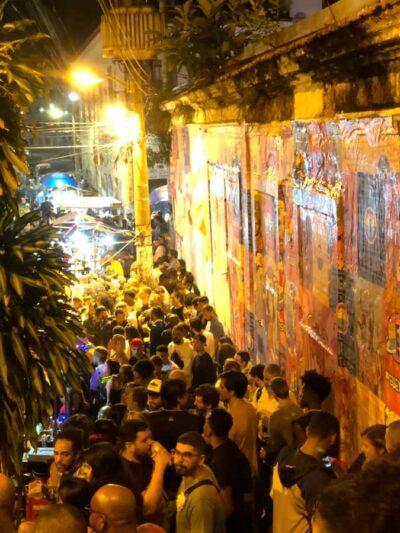 ★ 4.4Pedra do Sal: Live Samba Night with Local Guide & DrinkFrom $41183 reviews
Also filed under