
Review · COPACABANA & IPANEMA TOURS
Samba Class in Copacabana
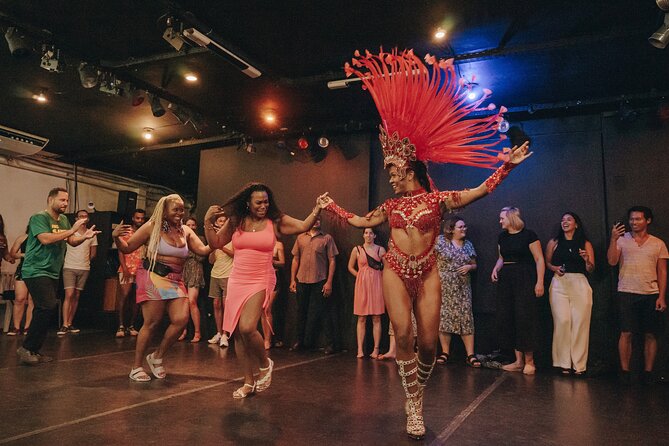
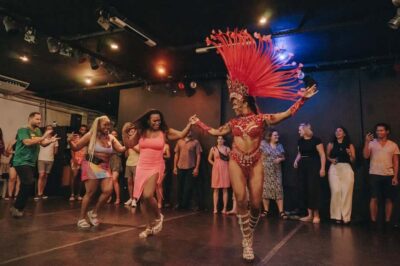
Samba class in Copacabana makes Rio move. In just one hour, you learn real samba basics with a friendly instructor, no partner needed, and you can even try on a daytime Carnival costume. It’s a simple way to add culture and movement to a sightseeing day in Rio.
I especially like how easy the steps feel, even if you are not a dancer. Instructors such as Bem Vind and Carla are known for clear counts and patient teaching, and the class often turns into a social space where solo travelers mix naturally. I also like the practical vibe, water is included, and you’re taught in a way that works for different comfort levels.
The main drawback to keep in mind is crowding during busier periods like the end of December and Carnival season. When the room gets full, it can be harder to see the instructor clearly.
Key things to know before you go
- 1-hour format that fits cleanly between beach time and other sights in Rio
- No partner or experience required, with steps taught for different levels
- Studio location in Copacabana inside an office building on the 6th floor
- Small group feel with a maximum of 50 people
- Daytime Carnival costume option during the day class
Why this 1-hour Samba class in Copacabana is a smart Rio add-on
Rio can be a lot. Big views, long walks, loud nights. This is different. It gets you moving in a small, social setting right in Copacabana. And it is short. About one hour means you will not feel trapped in a half day plan.
Most importantly, it is built for beginners. You do not need a dance partner. You do not need prior experience. That matters in Rio because so many cultural activities assume you already know what to do. Here, you start with the basics and build from there.
You also get a cultural layer beyond the steps. The class is designed to explain samba as more than movement. You learn the feel of the rhythm, and why samba has its own rules and personality. In a place like Rio, that kind of context turns a fun activity into something you actually remember.
Finding the studio in Copacabana, room 603 on the 6th floor
The meeting point is on Av. Nossa Sra. de Copacabana, 807, room 603, in Copacabana. That sounds straightforward until you see that it is inside a mixed working office building.
A couple of practical tips help here:
- Go expecting a building. Not a standalone dance venue.
- Be ready for stairs or elevators to reach the 6th floor.
- When you arrive, plan a minute or two to locate the doorway and then the room number.
One review specifically noted how it can be easy to miss at first because it sits right on a main road and is accessed through an office building doorway. The good news is that the area is accessible by public transit and taxi, so you can come directly from Copacabana beach or your other nearby stops.
What happens during your 60-minute Samba lesson
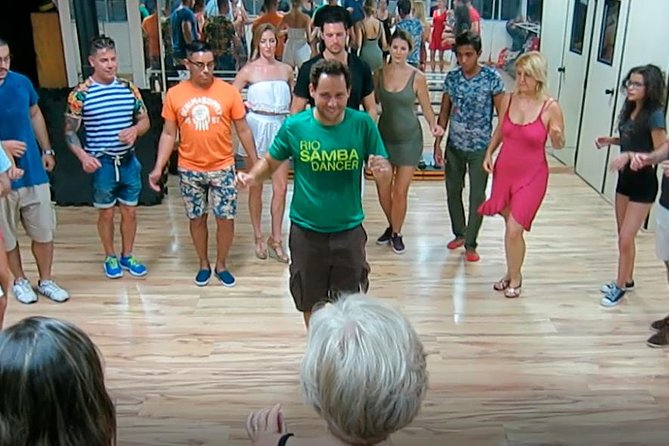
Think of the class as a guided practice with short teaching moments. You meet the instructor at the studio, then the session moves through core samba steps and how to combine them.
Here is what you can generally expect in a beginner-friendly structure:
- You learn basic samba movements and foot patterns first.
- You practice with the instructor leading, often with counts and repeated drills until your body gets it.
- Then you move through simple directions and spacing, like crossing the floor and doing turns.
- The lesson includes both forward and backward movement, so you get comfortable with the rhythm in different body positions.
The “no experience needed” promise holds because the teaching style is built for real learning. One instructor, Bem Vind, was praised for using clear instruction with counts and even accenting steps. That kind of detail is what makes samba click faster, especially if you are worried you will be lost.
Another positive theme is the group interaction. The host and instructor keep you engaged, and it is not a silent lecture. You will be part of the room’s energy, not just watching it.
Instructors make or break the experience, and the names matter
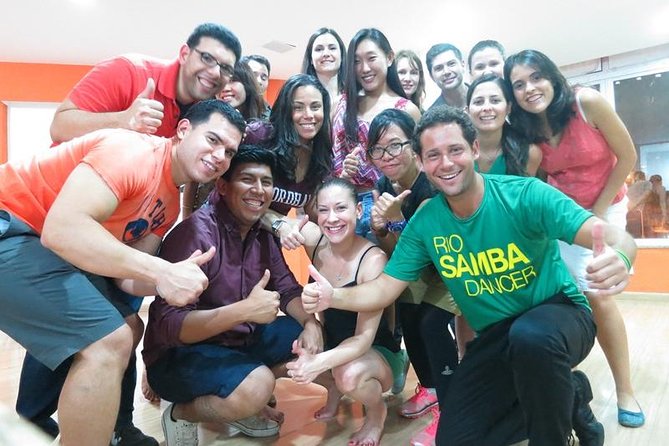
This is one of those tours where the instructor really shapes your outcome. The class does not just throw you into a music track and hope for the best. It is teacher-led.
You can see it in the instructor names people remember:
- Bem Vind stood out for very clear, professional instruction and for stopping to correct when something did not land.
- Marcos was praised as energetic and for making the steps feel easy enough to follow.
- Carmen earned praise for being fun while still teaching something, even if you get a workout in the process.
- Carla was highlighted for teaching real samba, not just a watered-down version people learn at home.
Even if you do not know these names before you arrive, it is useful to know what kind of teaching style to look for. Expect someone who will give cues, reset when you struggle, and keep you moving.
Why solo travelers tend to love this class
Samba classes can feel intimidating if you think you need to be a performer. This one lowers the pressure.
You do not need a partner, so you avoid the awkward start where you are searching for someone to dance with. Instead, you follow the instructor and rotate through group practice. That is why this is often a strong choice for solo travelers. You get a shared activity and a friendly room without the social logistics of finding a companion.
It also works well for couples. One reason is timing. It is short. Two people can do it and still have energy left to explore after. You also get a shared story that is more memorable than yet another photo stop.
Price and value: is $35 worth it?
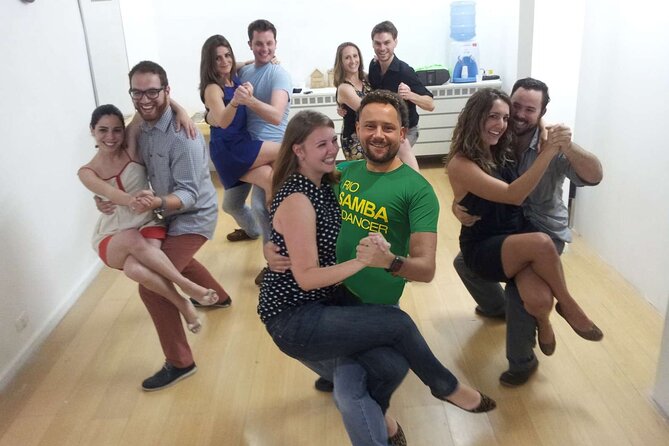
At $35 per person for about one hour, this is priced for an experience you can repeat without stressing your budget. It is not a long show. It is instruction plus guided practice, with water included.
Here is what you actually get for the money:
- A local guide and a professional guide
- A tour escort or host
- Bottled water
- Samba instruction focused on real basics
What you do not get is transportation. That is normal for a class-based activity in a city neighborhood. You will pay for your own trip to the studio, usually by taxi or transit.
Is it good value? For most people, yes, because samba is one of those activities where a short, beginner-friendly lesson is exactly what you want. If you tried to self-learn from videos, you would lose the rhythm cues and the coaching. Here, you get structure in a compact timeframe.
If you are on a tight schedule in Rio, this price makes it an easy “yes.” If you are looking for a full-day deep dive into dance, you might want something longer. But for movement, culture, and a confidence boost, the format fits the cost.
Shoes, socks, and comfort: small details that save you trouble
Samba is physical. You need to feel stable and free enough to move your feet properly.
A few practical guidelines based on what people experienced:
- Wear something you can move in immediately.
- Skip anything with slippery soles.
- Some sessions have been described as very crowded, and in at least one case the class involved doing it barefoot. You should be ready for the possibility of barefoot or very minimal footwear practice if the room setup pushes you that way.
Your best bet is to bring a plan for comfort:
- If you are cautious, wear dance-friendly socks or shoes that grip well.
- If you hate the idea of barefoot, be honest about your comfort at check-in and see what the instructor recommends.
This is not about style. It is about feeling steady and not worrying about your feet more than your rhythm.
Crowd timing: end of December and Carnival can change the room
The class can run comfortably most of the year, but there is a specific timing issue. Around the end of December and during Carnival season, it can get tricky because of bigger demand.
What that means for you is simple: crowding can affect visibility. If you cannot see the instructor as clearly, learning slows down. That is why people sometimes feel the class is less enjoyable in those crowded moments.
The provider does adjust times and spaces to manage the crowd as best as possible, and there is even a plan to move to a bigger studio during the end-of-year and Carnival period. Still, your best strategy is to choose timing wisely.
If you want the smoothest learning experience, aim for less peak demand days when possible. If you go during peak weeks, accept that you might be shoulder-to-shoulder and focus on following the cues you hear more than what you see.
Daytime class and the Carnival costume option
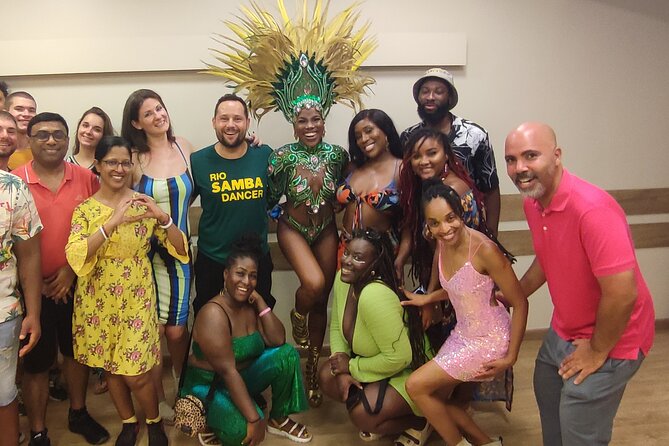
If you book a daytime session, you may get the chance to try a carnival costume. That is a fun add-on because it changes the feeling of samba. Costume can make the movements feel more playful and performance-ready, even when you are still learning the basics.
Also, it is a great way to get photos and a stronger Rio memory without booking a full carnival tour. You are still doing the actual class. The costume is an extra layer, not the whole point.
Accessibility and group size: who it fits and how it runs
Most people can participate. Children must be accompanied by an adult, so plan to be responsible for your little one’s participation.
The group is capped at a maximum of 50 people. That matters because you are in a studio, not a stadium. Smaller rooms can turn chaotic when too many people show up. The cap helps keep the format workable.
There is also a note that the class may be operated by a multi-lingual guide. That is helpful if you do not speak fluent Portuguese. Some reviews mentioned translation challenges when an instructor did not speak English, but the overall setup is designed to keep you involved.
If you are worried about language, you can still have a good time. Samba is mostly physical and musical. Even when words are limited, counts, demonstrations, and repeated practice usually get the job done.
Should you book the Samba class in Copacabana?
Book it if you want:
- A short, social activity that fits into a normal day in Rio
- A beginner-friendly way to learn samba basics without the stress of dancing with a partner
- Clear instruction and a high-energy room led by experienced instructors like Bem Vind, Marcos, Carmen, or Carla
Skip it or think twice if:
- You know you will hate crowded indoor spaces, especially around end-of-year and Carnival weeks
- You want something long and performance-heavy rather than a class-based lesson
- You expect the experience to include transportation. You’ll need to get yourself to the studio on Av. Nossa Sra. de Copacabana
If your goal is to walk away feeling more confident about samba, with a real rhythm in your body, this is an easy yes. It is practical, it is fun, and it is one of the few Rio activities that can genuinely make you part of the culture without requiring prior dance skills.
FAQ
How long is the Samba Class in Copacabana?
The class lasts about 1 hour.
Do I need a dance partner or prior experience?
No. You do not need a partner and you do not need prior dance experience.
What is included in the tour price?
It includes bottled water, a local guide, a professional guide, and a tour escort or host.
Is transportation to and from the studio included?
No. Transportation to and from attractions is not included.
Where does the class meet?
The meeting point is Av. Nossa Sra. de Copacabana, 807, room 603, Copacabana, Rio de Janeiro, RJ, 22050-002, Brazil. The activity ends back at the meeting point.
How big is the group?
There is a maximum of 50 travelers.
What is the cancellation policy?
You can cancel for a full refund up to 24 hours in advance. If you cancel less than 24 hours before the start time, the amount paid is not refunded.
More Tour Reviews in Rio de Janeiro






More of the South-Zone Sand




Rio de Janeiro by the Drumbeat




Copacabana & Ipanema Tours, compared.
 ★ 4.9Beginner Samba Lesson in IpanemaFrom $251,071 reviews
 ★ 4.6Samba Class in CopacabanaFrom $25262 reviews
 ★ 3.7Stand-Up Paddle – Copacabana Beach SunriseFrom $7039 reviews
 ★ 4.7Surf lessons: in Arpoador in Ipanema.From $3335 reviews
 ★ 3.6Surf lessons with local instructors in Copacabana/ipanema!From $1031 reviews
 ★ 4.7Yoga + Sound Healing – Ipanema ParkFrom $2812 reviews
 ★ 4.2Bossa Nova and the Carioca life – Copacabana and IpanemaFrom $508 reviews
 ★ 3.7Copacabana Sunrise Stand Up Paddleboard TourFrom $586 reviews