
Review · LAPA & SANTA TERESA BOHEMIAN TOURS
Centro Historico and Lapa – Santa Teresa Walking, Historical and Bohemian Tour
Rio rewards slow walking.
This is a Centro Historico and Santa Teresa day where you get big sights, clear explanations, and a real feel for how the city shifts from grand buildings to bohemian streets. I especially love the way the tour stitches together architecture and street life, from the Cathedral stained glass to the Selarón staircase. One thing to consider: it is a full 7 to 8 hours on foot, with some stairs and uneven spots, so comfy shoes matter.
A small group makes it easier to hear your guide and ask quick questions. I also like that it mixes iconic stops with viewpoints and local staples, like the old-school art deco style at Confeitaria Colombo. If you want a totally relaxed pace with tons of time to linger, this may feel a bit structured.
Key highlights you will feel right away
- A small group experience (max 12), so your guide can keep things moving without losing the story.
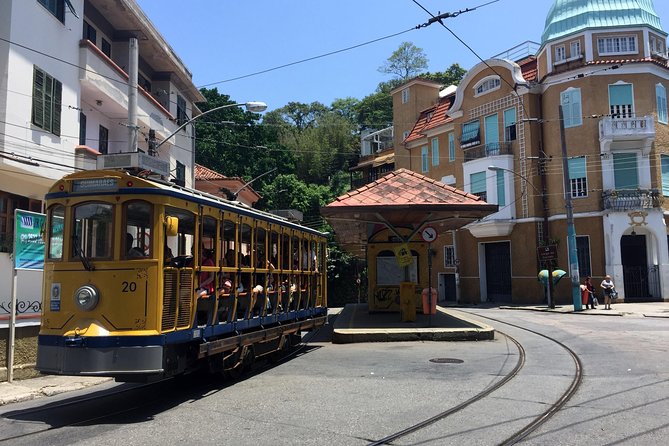
- Panoramic Santa Teresa Bonde tram ride, included, with city views as you climb.
- Landmarks that connect, from Cinelândia and Praça Quinze de Novembro into Lapa and then Santa Teresa.
- Selarón steps and Lapa arches, two of Rio’s most photographed photo-stops, but with proper context.
- A real mix of styles, cathedral, baroque churches, art deco café, Olympic-era street art, and colonial-era aqueduct history.
- Included drinks (caipirinha, beer, soda, fruit juice, or water), helpful on a long walk day.
Centro Historico to Lapa and Santa Teresa, what this tour really is
This tour is built like a guided walk that keeps changing the mood of Rio as you go. You start with the civic and cultural spine of the city, then head through historic squares and pedestrian lanes, and finally climb into the hillside neighborhood of Santa Teresa. The payoff is not just seeing famous places, but understanding why they matter to Rio’s story.
It also has a practical rhythm. You get short stops inside or right at the main sights, and you move quickly enough that you still cover a lot without feeling like you are sprinting across the city. With a maximum of 12 people, the day feels more personal than a big bus tour.
Price-wise, at $137.80 per person for about 7 to 8 hours, you are paying for guide-led access to multiple top sights, plus the included Santa Teresa tram portion and a few ticketed elements. Lunch is not included, so plan to budget for that separately, but you do get drinks along the way.
Your morning start in Copacabana, with a city-day mindset
The tour meets at Copacabana Palace, A Belmond Hotel at 9:00 am. The meeting point is right where lots of visitors already are, so it is easier to get there without complicated transfers.
The day ends back at the meeting point. That matters because it removes one big planning headache, you do not have to figure out how to return from the hillside after the last stop.
Cinelândia: the Rio opera house square where the city looks formal
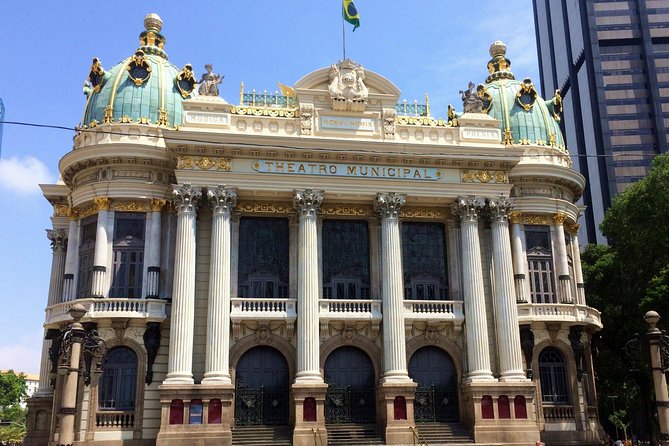
Your first stop is Cinelândia, a major square packed with landmark institutions. Here, you focus on what makes this area a cultural center, including the Teatro Municipal (Rio’s opera house), Museu de Bellas Artes, the city hall building, and the Biblioteca Nacional.
What I like about this start is that it gives you a baseline. Before you hit the older churches and colorful streets later, Cinelândia shows you the official, monumental side of Rio. You also pass Teatro Odeon, noted as the only cinema in the square still operating, which is a nice reminder that history is not frozen here.
The Metropolitan Cathedral of Saint Sebastian: stained glass that makes the scale feel real
Next up is the Metropolitan Cathedral of Saint Sebastian, where you go inside for architecture and history, including the attention to the monumental stained glass windows.
This is a good pause in the day. Even if churches are not usually your thing, the Cathedral is worth it because the design is dramatic and the stained glass turns the light into something you can actually feel. It also sets you up for the next church stops, where style ranges from civic grandeur to baroque richness.
Largo da Carioca: baroque churches side-by-side and a terrace view
At Largo da Carioca, you get a walk-by explanation of two key churches: Santo Antônio and São Francisco da Penitência. The latter is described as one of Brazil’s most beautiful baroque churches, and the stop also includes the panoramic view from the terrace.
This is one of those moments where you start to see the geography of the historic center. You get context for where things sit, not just what is photographed. The terrace view is also a practical break before you move through more pedestrian streets.
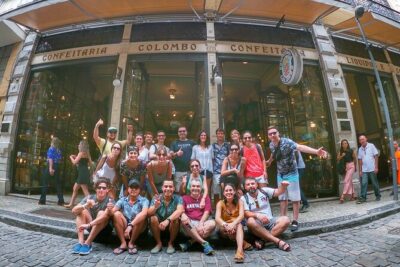
Confeitaria Colombo: art deco flavor in the middle of history
Then you head through the old Rio pedestrian streets toward Confeitaria Colombo, one of the oldest cafés in Rio. The focus here is its art deco style, which makes it an iconic Centro stop.
Even if you do not plan a long sit-down, this is the kind of place where a quick look matters. The building helps connect the area’s past with the way people still meet, eat, and linger today. It is a nice contrast after the dense religious architecture, and it keeps the walk feeling local rather than museum-only.
Praça Quinze de Novembro: the Republic square, empire details, and ferry views
At Praça Quinze de Novembro (15th of November square), you cover several big points at once: the Church of Our Lady of the Carmelites, the Paço Imperial, and the Equestrian Statue of General Osorio. You also take in the Tax Island area and the ferry pier to Niterói and Paquetá in Guanabara Bay.
I like how this stop expands your mental map of Rio. You are in the Centro, but you are also pointed outward to the water and the connections beyond the city center. It is a reminder that Rio is not just streets, it is a waterfront city with movement and views.
Praça Pio X: Candélaria, cultural stops, and art-friendly streets
You then reach Praça Pio X, again moving through pedestrian lanes. This part highlights Cândelária Church, the Olympic boulevard, and major cultural spaces like the CentrO Cultural do Banco do Brasil and Casa França-Brasil.
If you like the idea that a city tour should include art and culture beyond just old buildings, this is where you start feeling it. It also keeps the day from becoming a straight line of churches and monuments. You get more modern cultural framing while still staying in the historic footprint.
Mosteiro de São Bento: where the church becomes the main character
At Mosteiro de São Bento, you visit one of Rio’s standout churches. The emphasis is on its history, and this is another stop where the guide’s storytelling style really helps you understand what you are looking at.
This part works well even if you have limited patience for religious sites, because the monastery is visually striking and the history gives it meaning. You will probably find yourself slowing down here, if only because it is the kind of place that invites quieter attention.
Mauá Square: Museum of Tomorrow from the outside, and a top-floor view
Next comes Mauá Square, a cultural hub where the stop focuses on interesting architecture. You do not enter the Museu de Amanha (Museum of Tomorrow), but you still get the significance and what makes its design a conversation piece. You also get a look at the Art Museum of Rio, with access to the panoramic terrace on the top floor.
This is a smart inclusion. The terrace view is where your whole day starts to feel tied together: you can see the Niterói Bridge and the bay area, and you get a sense of distance, scale, and the way neighborhoods step up from sea level. This kind of viewpoint is a reward for walking, and it helps you remember what you have seen.
Etnias graffiti mural by Kobra: Olympic-era street art with a message
After the bay view, you head to Etnias – Mural de Graffiti (Estúdio Kobra). The mural is presented as the largest in the world, representing five ethnic groups, created by Eduardo Kobra for the Olympic Games.
This stop is a great reminder that street art can be political and historical at the same time. It also breaks up the day visually, especially after church tones and architectural stonework. If you like modern art, you will appreciate that you are not just looking at color, you are getting the idea behind it.
Back toward the climb: Santa Teresa tram ride for real, not just a photo stop
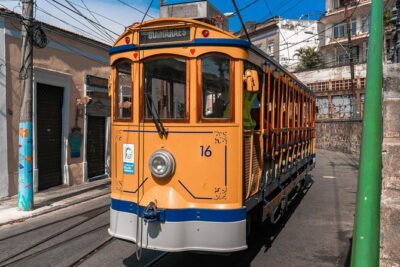
Then the pace changes. You return to the Santa Teresa tram station and take the famous yellow Bonde up into Santa Teresa. The tram portion is about 30 minutes, and it is described as a panoramic walk full of charm.
This is one of the best value parts of the tour because you are not just shown Santa Teresa from street level. You get the ride, which means views during the climb and a more authentic feel for how the neighborhood connects to the city.
If you get carsick easily, I would still suggest you sit where you feel most stable, but the tour details do not specify anything beyond that included tram experience.
Largo dos Guimarães: Santa Teresa houses, viewpoints, and bar and restaurant energy
In Santa Teresa, you explore Largo dos Guimarães for around 45 minutes. This is where you discover houses dating from the late 1800s to early 1900s, and you also get the practical sense of where people eat and drink in the neighborhood.
This is a key shift from the Centro. The streets feel more lived-in and less institutional. It is the right place to slow down a bit, take photos, and decide where you might want to return later on your own.
Parque das Ruínas: Laurinda Santos Lobo’s former home and a Centro overlook
You then reach Centro Cultural Municipal Parque das Ruínas, described as Santa Teresa’s iconic point. The stop is the former home of Laurinda Santos Lobo, transformed into a gazebo with an incredible view toward the Centro, the Arches of Lapa, Christ, and Botafogo.
This is exactly the kind of viewpoint that makes Santa Teresa worth the climb. You understand, in one glance, why Rio builds upward into the hills. The Arcos of Lapa show up in the same visual frame as bay landmarks, so your day starts clicking into one coherent picture.
Escadaria Selarón: the color staircase with a long artistic commitment
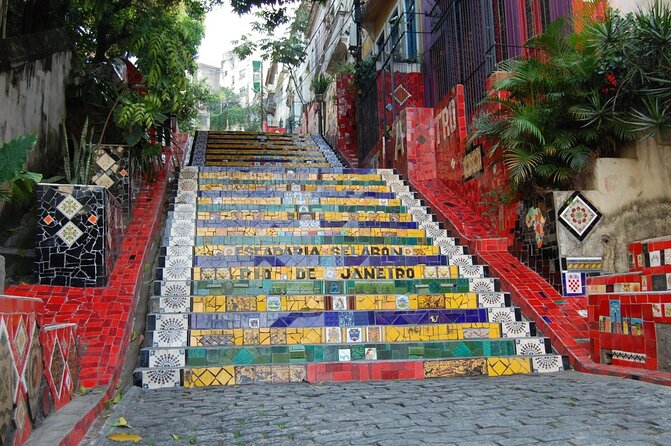
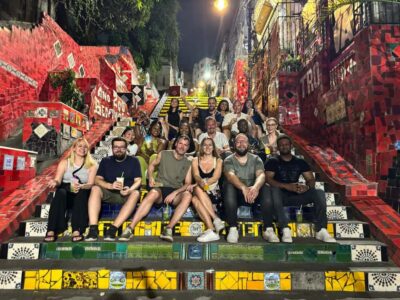
Next comes the famous Escadaria Selarón, the multicolored staircase created by Chilean artist Jorge Selarón. The tour notes it took him about twenty years to create it, which is important context because this is not a quick instagram project.
Expect a stop that is both visual and atmospheric. The stairs are a public art project, and you can feel the neighborhood’s energy around them. It also links directly to your later Lapa stop, because Selarón’s work sits in the path between Santa Teresa and Lapa’s more open street scenes.
Arcos da Lapa: aqueduct arches, graffiti walls, and a city icon with engineering roots
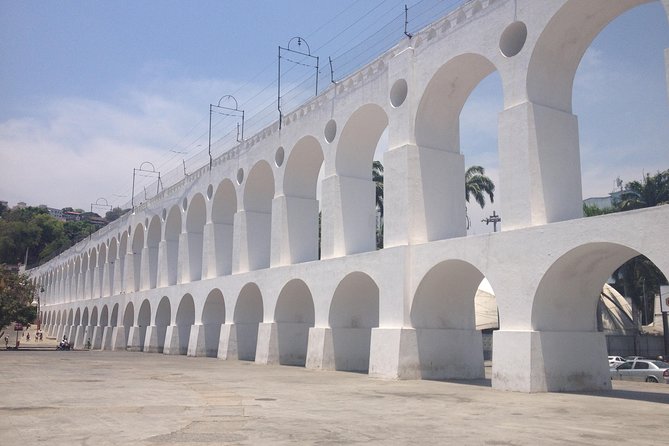
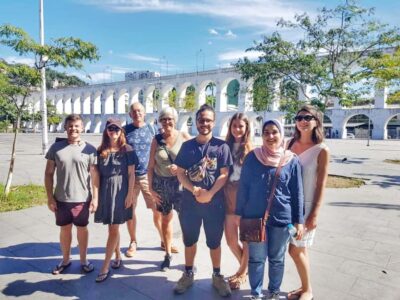
Finally, you move down toward Lapa for the Arcos da Lapa, an old aqueduct dating from the 18th century that supplied water to Rio until the end of the 19th century. You also see the graffiti covering the area’s walls.
This is a great closing stop because it explains Rio’s mix of old and new. The architecture is functional history, and the street art is today’s voice layered on top. The tour also reminds you that the tram passes through the aqueduct to access Santa Teresa, which ties your whole transportation loop together.
Drinks on the walk: a small inclusion that actually helps
One thoughtful detail is the included drinks. The tour provides you a caipirinha, a beer, a soda, a fruit juice, or water during the day. For a long walk tour, this makes a difference. You are less tempted to spend time hunting for a stop you might not trust, and it keeps energy up as you move from square to square.
Timing, pace, and what to wear
This is an all-day style experience at 7 to 8 hours. Even with multiple short stops, you will still do a lot of walking, plus the Santa Teresa climb happens by tram and the Selarón area involves steps.
My advice: wear shoes you would happily walk in for hours, and bring a light layer even if Rio feels warm. You will also enjoy the day more if you carry some patience for crowds at the iconic photo points.
Who this tour suits best
This works well if you want:
- A guide-led walk through Centro Historico highlights without feeling lost
- Clear explanations about how churches, civic buildings, and street art connect
- A real Santa Teresa experience, including the Bonde tram ride and a couple of viewpoints
If you are mainly chasing beaches or low-effort sightseeing, you might prefer a slower half-day. But if you like architecture, city history, and neighborhood vibes, this tour is a strong match.
Should you book this Centro Historico and Santa Teresa tour?
I think you should book it if you want a well-structured Rio day that balances iconic sights with enough context to make them click. The best reason is the combination: Centro landmarks plus Santa Teresa’s hillside charm, tied together with the included tram ride and the right stops for views.
I would skip it or switch to something lighter if you know you cannot handle a full 7 to 8 hour walk day with stairs near the most famous spots. Also consider doing a food-focused plan for lunch since it is not included, so you are not stuck deciding late.
FAQ
How long is the Centro Historico and Santa Teresa walking tour?
It runs about 7 to 8 hours.
What is the price per person?
The price is $137.80 per person.
What time does the tour start, and where does it end?
It starts at 9:00 am at Copacabana Palace, A Belmond Hotel and ends back at the same meeting point.
How large is the group?
This tour has a maximum of 12 travelers.
Is lunch included?
No, lunch is not included.
What drinks are included during the tour?
You are offered a caipirinha, a beer, a soda, a fruit juice, or water during the tour.
Do you visit the Museum of Tomorrow?
You do not visit the Museum of Tomorrow, but it is mentioned as part of the Mauá Square stop.
Is the Santa Teresa tram ride included?
Yes. The tour includes taking the yellow Bonde from the Santa Teresa tram station up to Santa Teresa, and this portion is included.
Are any admission tickets included?
Some stops include admissions while others are free. For example, the Largo da Carioca stop includes admission, and the tram portion is included. Many other key stops are listed as free.
What is the cancellation policy?
The experience is non-refundable and cannot be changed for any reason. It may also be canceled if the minimum number of travelers is not met, in which case you are offered a different date or a full refund.
More Tour Reviews in Rio de Janeiro






Under the Arches: More Lapa Nights





Centro and the Port, Walked Properly




Lapa & Santa Teresa Bohemian Tours, compared.
 ★ 4.7Rio: Pub Crawl in Lapa with Cachaça Tasting and Live SambaFrom $33881 reviews
 ★ 4.5Santa Teresa, Lapa, and Cinelândia with Tram Ride and Selarón StepsFrom $60274 reviews
 ★ 4.4Historic Rio and Santa Teresa Half-Day TourFrom $47228 reviews
 ★ 4.5Ancient Rio and Santa Teresa Tour with Hotel pick-up and drop-offFrom $55154 reviews
 ★ 4.2Rio Scenarium Entrance, Dinner, and Open BarFrom $111126 reviews
 ★ 5.0Walking tour of the bohemian neighborhoods of Santa Teresa and LapaFrom $7259 reviews
 ★ 5.0Historical Downtown and Lapa – Walking TourFrom $4044 reviews
 ★ 4.4Historical Downtown and Lapa Walking TourFrom $6032 reviews