
Review · HISTORICAL TOURS
Explore Little Africa : Unveiling Afro Heritage in Rio de Janeiro
Rio hides an Afro heritage walking route. I love the decolonial storytelling that reframes familiar Rio streets through Afro-Brazilian memory, and I love the included museum access that turns this into more than a photo walk. One consideration: it is a compact route with real street walking, so come ready with comfortable shoes.
This half-day style tour runs about 3 hours 30 minutes with a small group size (max 20), and you end in the Saúde neighborhood near Largo da Prainha. The route layers religious landmarks, port history, and Afro-Brazilian culture, which is why people who usually stick to Rio’s top attractions often say this feels like a different city.
One more heads-up: the tour depends on good weather. Also, it is not recommended for people with limited mobility, and the day can be long on the feet even though the total time is under four hours.
Key highlights you will feel right away
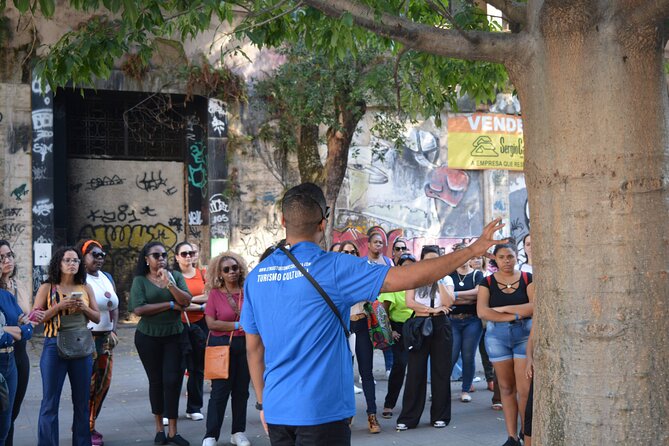
- Decolonial framing at Matriz da Paroquia de Santa Rita, with an outside cultural and heritage focus
- IPN (Instituto de Pesquisa e Memoria Pretos Novos) with admission included for a memory-focused archaeological stop
- MUHCAB museum time in Gamboa, focused on Afro-Brazilian history and culture
- Cais do Valongo, a former port wharf site tied to Rio’s Black history
- Pedra do Sal and Largo São Francisco da Prainha, finishing in the heart of the Little Africa story
- A short VLT public transport ride, included in the price, which helps break up the walk
Why Little Africa matters on a Rio map, not just in a lecture
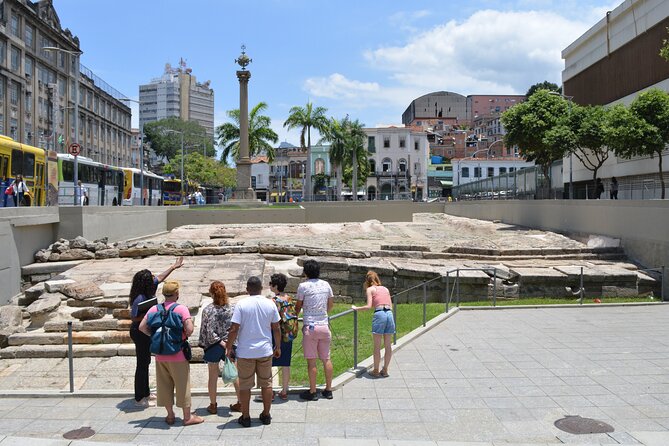
Rio is famous for big icons, but it is also famous for erasing stories. This tour is built to do the opposite. You will spend your time where Afro-Brazilian history is physically present, then you will hear it explained through a decolonial lens that connects memory, culture, and the meaning of place.
I like that the experience is not just “here is a statue, take a photo.” It is structured as a sequence of meaningful stops, starting in Centro and walking your way toward the Saúde area. The result is that you start to see how the city’s port district, religious landmarks, and community spaces relate to one another.
It also helps that the tone is balanced. You will get cultural context, but you will also be faced with the darker side of slavery and its long shadow in institutional inequality today. That is a lot to hold in one walk, but it is handled in a way that keeps the learning grounded in real locations.
Price and logistics: what your $82.53 actually covers
At $82.53 per person for about 3.5 hours, this is priced like a focused guided history experience, not a casual city stroll. The best part for value is that many stops are free to enter, and you also get ticketed museum time where it matters.
Here is what you should expect included:
- All fees and taxes
- Ticket for The New Black Institute
- Admission ticket included for IPN
- Several other stops are free (so you are not paying extra repeatedly)
- A short ride on VLT public transport (included)
What is not included:
- Lunch
- Tips
Practical note: you are starting at Santuário de Santa Rita, Largo de Santa Rita, Centro and ending at R. São Francisco da Prainha, 7, Saúde, near Largo da Prainha. That matters if you plan your afternoon, because you end in a different neighborhood than where you start.
Timing matters too. The tour runs on a schedule that can be affected by closures. The New Black Institute is closed on Sundays, and from 16th December to 5th January plus during Carnival season, museums will be closed. The experience also requires good weather, and if the tour is canceled due to poor weather, you will be offered another date or a full refund.
Your route: from Santa Rita to Valongo and down to Largo da Prainha
This is a tight route, with stops ranging from about 20 to 40 minutes. You will mostly be outside, with a couple of museum-style pauses where you can slow down and let the context land.
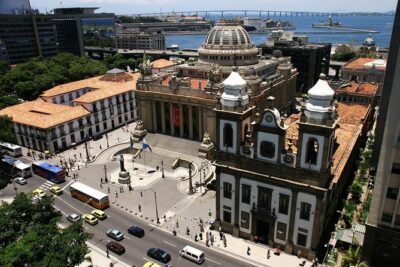
Stop 1: Matriz da Paroquia de Santa Rita (about 20 minutes, external)
You start with an external visit to Matriz da Paroquia de Santa Rita. The focus is cultural and heritage-based, and the guide frames what you are seeing with a decolonial narrative.
Even though it is an outside stop, it sets the theme fast: this is not just about architecture. It is about how religious spaces in Rio intersect with Afro-Brazilian history, identity, and memory. You are in Centro first, which helps because the city’s older core is where you can connect street-level geography with long-running stories.
What to watch for: because it is outside, you will want a jacket or sun protection depending on the season, and you will want your phone ready for photos at street level.
Stop 2: Instituto de Pesquisa e Memoria Pretos Novos, IPN (about 40 minutes, admission included)
Next is IPN, the Instituto de Pesquisa e Memoria Pretos Novos. This stop is explicitly about research and memory. You get an external visit connected to an archaeological focus, and the admission here is included.
Why this matters: the tour is trying to teach you how memory is kept. You are not just told “this happened.” Instead, you visit an institution that treats the past as something you can study, interpret, and carry forward through knowledge and remembrance.
In the experience, this is often where people’s emotions shift from curiosity to seriousness, because it ties Afro-Brazilian history to physical remnants and institutional effort to protect that memory.
Stop 3: MUHCAB, Museum of Afro-Brazilian History and Culture in Gamboa (about 40 minutes)
Then you head to MUHCAB in the Gamboa region. This is a territory museum focused on Afro-Brazilian history and culture.
This is one of the longer stops, and it acts like a pause button. After port-related history and a memory-focused institute, MUHCAB helps you zoom out. You are not only looking at tragedy and forced displacement. You are also looking at culture, identity, and historical continuity.
What I’d tell you to do here: spend your time asking questions about what you are seeing, not just collecting facts. A good guide will connect the themes between MUHCAB and the next stops.
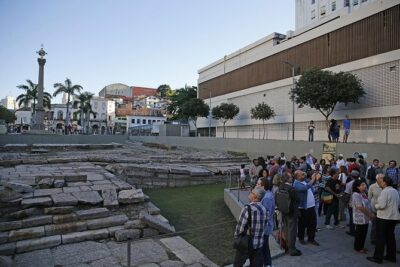
Stop 4: Cais do Valongo (about 30 minutes, external, free)
Next comes Cais do Valongo, the former wharf in Rio’s port district. It sits between present-day streets in the port area, and the stop is an external visit.
This location is powerful because it is a specific place in the city, not an abstract concept. You will understand why it is treated as a major site for Black history in Rio, and why the port and the city’s broader history cannot be separated.
If you care about learning from places rather than only words, this is a highlight.
Photo tip: plan for different angles. Wharf sites can look similar from one viewpoint, so reposition if your group is still moving.
Stop 5: Pedra do Sal (about 25 minutes, external, free)
You then visit Pedra do Sal, a historical and religious landmark in the Saúde neighborhood near Largo da Prainha.
This stop adds a different kind of meaning to the route. After the port district, Pedra do Sal brings in a landmark shaped by spiritual and historical importance. It also transitions you closer to the final neighborhood you will finish in.
Because it is external, you will likely have a moment to look around and notice how the area feels now compared to how it is remembered in the tour narrative.
Stop 6: Largo São Francisco da Prainha (about 20 minutes, external, free, tour ends)
Your walk ends at Largo São Francisco da Prainha, near Largo da Prainha. This square is presented as a symbolic territory of Little Africa marked by Black presence and the zungus. Today, it is also considered one of the coolest places in Rio by Time Out.
That ending matters. You are not finishing at a museum with exits and gift shops. You finish in a public square with contemporary energy, which helps the story feel connected to daily life.
If you are into photos, do a final scan here before you leave. This is your last stop, so if the light is changing, this is where you will get the best chance to frame your shots.
The guides and pacing, the difference between a walk and a real experience
A huge part of why this tour gets near-perfect marks is the guide work. Some departures are led by guides such as Raphael, Rafael, Carolina, Malu, Val, and Carol, and the common thread in their style is that they teach with clarity and adjust to the group.
One example from the feedback: guides like Carolina have been praised for compassion and pacing, including adjusting so someone with walking limitations could still experience the tour. Another theme is that guides like Rafael and Raphael are described as fun, deeply informed about the topic, and comfortable with questions.
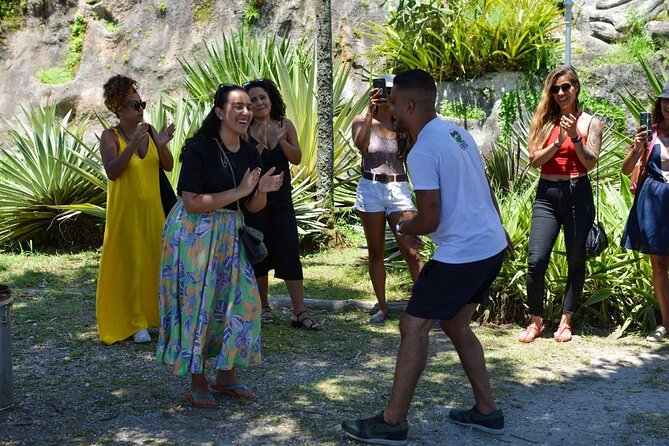
You get a small group (max 20), which means you are not stuck listening at the back of a crowd. You can ask the “obvious” question without feeling awkward, and that is often what turns a history tour into a personal experience that feels safe and human.
One practical thing: walking time adds up. If your tour starts later in the day, the light can get dim toward the end, and photos may suffer. If you have control over your departure time, the earlier option is usually the better choice for good visibility at the final stops.
What you will learn, and what it changes about how you see Rio
This tour is designed for people who want a different angle on Rio. Instead of starting and ending with the postcard sites, you start with Afro-Brazilian heritage across multiple meaningful locations.
A theme that comes through clearly is perspective. You hear about slavery from a different starting point than people might be used to, and the framing is explicitly about how these past realities shape today’s institutional inequality.
At the same time, the tour does not stay stuck in pain. By connecting port sites, cultural institutions, and religious landmarks, it shows how culture survives and transforms. That is why even people who do not love history tours often say the city suddenly makes more sense.
Who should book this tour (and who might rethink it)
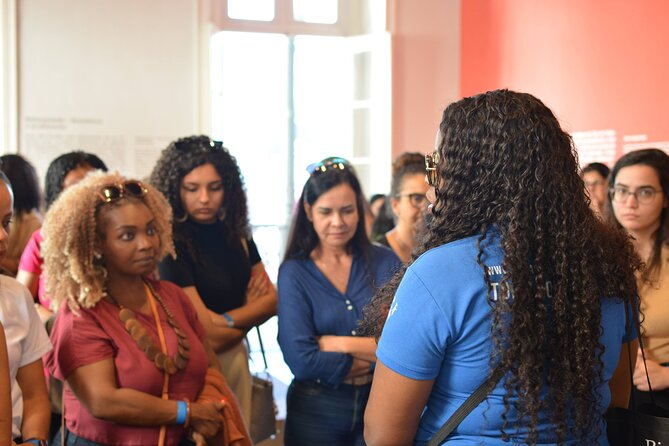
Book it if you want:
- Afro-Brazilian history and culture in Rio explained through place, not just slides
- A guided route that treats memory seriously, including the realities of slavery and its long effects
- A small-group experience where you can ask questions
- A route you can pair with classic Rio sights, but with a completely different viewpoint
Consider a different option if:
- You have limited mobility. The tour is not recommended for people with disabilities.
- You need a lot of breaks. This is about 3.5 hours with multiple stops, and lunch is not included.
- Your schedule is tight for a later neighborhood. You end in Saúde, so plan your next transport accordingly.
Should you book Little Africa: Unveiling Afro Heritage in Rio de Janeiro?
If you care about seeing Rio beyond the usual highlights, I think this is a smart booking. The value is strong because you get a focused timeline, a mix of free and ticketed stops, and an included VLT ride, all centered on Afro-Brazilian heritage sites that many other tours skip.
The main reason to pause is the walking. If you are comfortable on foot and you can handle a serious subject with context, you will likely come away feeling like you learned something you cannot get from guidebook photos.
Just double-check the date, especially if you are traveling on a Sunday or during museum closure windows like Carnival season and the 16th December to 5th January period. And plan your day around the neighborhood shift, since you start in Centro and finish at Largo da Prainha.
FAQ
How long is the Little Africa tour in Rio de Janeiro?
The tour lasts about 3 hours 30 minutes.
How much does the tour cost?
It costs $82.53 per person.
Where does the tour start and where does it end?
It starts at Santuário de Santa Rita in Largo de Santa Rita, Centro, Rio de Janeiro, and ends at R. São Francisco da Prainha, 7 in Saúde, near Largo da Prainha.
Is the VLT public transport ride included?
Yes. The tour includes a short ride on VLT public transport, and it is included in the final price.
Which tickets are included?
The tour includes all fees and taxes, and it includes a ticket for The New Black Institute. Admission is also included for IPN.
Is lunch included?
No, lunch is not included.
How big are the groups?
The tour has a maximum of 20 travelers.
When are museums closed?
From 16th December to 5th January, and during Carnival season, museums will be closed.
Is The New Black Institute open on Sundays?
No. The New Black Institute is closed on Sundays.
Can I cancel for a full refund?
Yes. You can cancel up to 24 hours in advance for a full refund, and refunds are based on local time. If you cancel less than 24 hours before the start, the amount paid is not refunded.
Old Rio de Janeiro, Walked Slowly





More Tour Reviews in Rio de Janeiro






Historical Tours, compared.
 ★ 4.4Historic Rio and Santa Teresa Half-Day TourFrom $47228 reviews
 ★ 4.9Little Africa Heritage Walking TourFrom $40177 reviews
 ★ 4.8Paraty: Historic Centre Walking Tour & Cachaça TastingFrom $1996 reviews
 ★ 5.0Learn the History of Rio with an Unforgettable City Center Walking TourFrom $4982 reviews
 ★ 4.5Rio’s city walking tour: a glimpse of history and olympic legacyFrom $6078 reviews
 ★ 4.5Olympic Boulevard, Museum of Tomorrow & Historical RioFrom $7266 reviews
 ★ 5.0Private walk tour of Paraty’s historical center – BY PARATY TOURSFrom $8049 reviews
 ★ 4.1Rio: Olympic Boulevard, Museum of Tomorrow & History TourFrom $6747 reviews
Also filed under