
Review · HISTORICAL TOURS
Rio’s city walking tour: a glimpse of history and olympic legacy
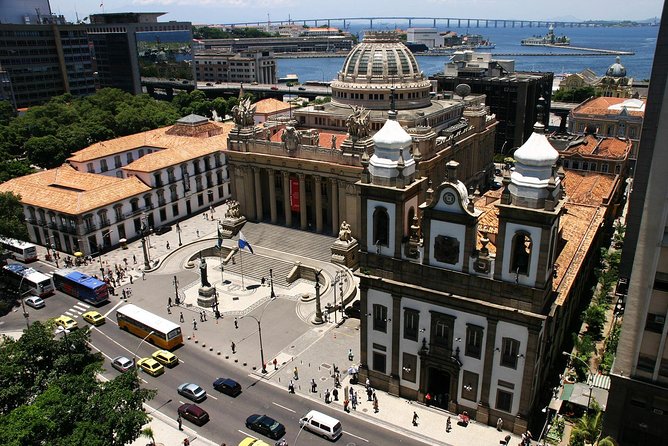
Downtown Rio tells its story on foot. This half-day walk stitches together Old Rio landmarks and an Olympic-era makeover, so you get both heavy history and modern culture in one loop. You’ll start with major churches, then swing through downtown power sites, and finish near Carioca Square with the chance to keep exploring.
I love the church-and-monastery focus. The route hits the neoclassical Church of Our Lady of Candelária (built from 1630 to 1775) and then the São Bento Monastery, founded in 1590, where the art and carved details are the main event. In reviews, standout moments often include the Benedictine chapel artwork and the Portuguese-style library of old books.
My second big plus is how the tour connects old Brazil to the Rio you see today. You’ll pass Praça XV do Novembro, see the Paço Imperial from the outside, and then shift gears to Mauá Square, tied to the Olympic legacy, with stops around the Museum of Tomorrow and nearby cultural centers. The main drawback to plan for is that it’s a walking tour, and the pace can feel brisk, especially if traffic forces extra shuffling.
Key highlights you’ll actually feel
- Free-entry stops at major sites, including the churches, monastery, and cathedral on the route
- São Bento Monastery (1590), often praised for the chapel artwork and the old-books library feel
- Mauá Square Olympic legacy, including the two museums (Rio Art Museum and Museum of Tomorrow) and the famous Cobra murals
- Praça XV do Novembro and Paço Imperial, key stages for Brazil’s emperors and Portuguese royal presence
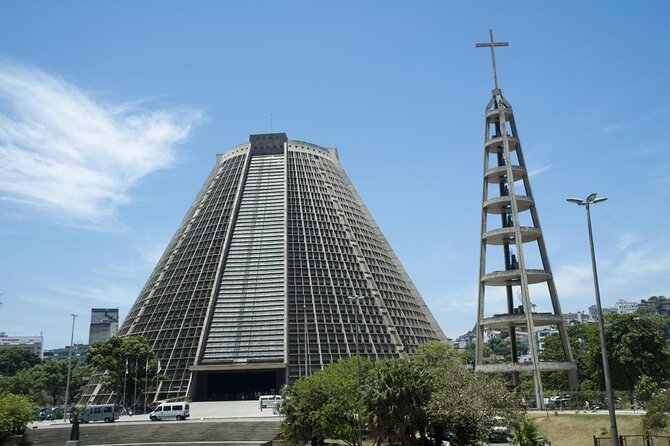
- Metropolitan Cathedral of Saint Sebastian, a giant conical space with huge internal diameter
- Small-group format (max 35) plus hotel pickup for many Rio neighborhoods
The best part of this tour: Old Rio with a modern ending
This is the kind of tour that helps your first visit feel organized. You won’t just tick off photos. You’ll walk through the city’s layers, starting with sacred, centuries-old architecture, then moving toward civic power and, finally, Rio’s newer cultural zone. It’s a smart mix if you want history without spending your whole day in museums.
The tour is also built for momentum. Stops are short enough that you get a real sweep of downtown, but not so short that you barely notice anything. Between the churches, the monastery, the cathedral, and the central squares, you get a strong mental map of where things sit.
Price-wise, the $60.77 is not “cheap,” but it’s not just for walking. You’re also buying hotel pickup and drop-off from many hotels in São Conrado, Leblon, Ipanema, and Copacabana, plus guided time at multiple major sites. If you’re trying to avoid transit headaches and keep moving, this is where the value shows.
Hotel pickup and downtown walking, without the guesswork
You’ll start at 1:00 pm, with pickup from your Rio hotel in the covered neighborhoods. That matters because downtown Rio can be confusing on your own, and timing matters when you’re trying to hit multiple landmarks in a half-day. The tour typically runs about 4 hours.
One practical note from real-world experience: if you’re staying at a hotel but your pickup team can’t find you quickly outside, go to reception first. At least one guide did this by request in reviews, and it’s the kind of small move that saves stress.
As for pace, you should expect a moderate walking level. The tour is designed as a city walk, but it’s still downtown, still city-crossings, and still lots of looking up. Comfortable shoes are not optional here.
Church of Our Lady of Candelária: neoclassical Rio begins
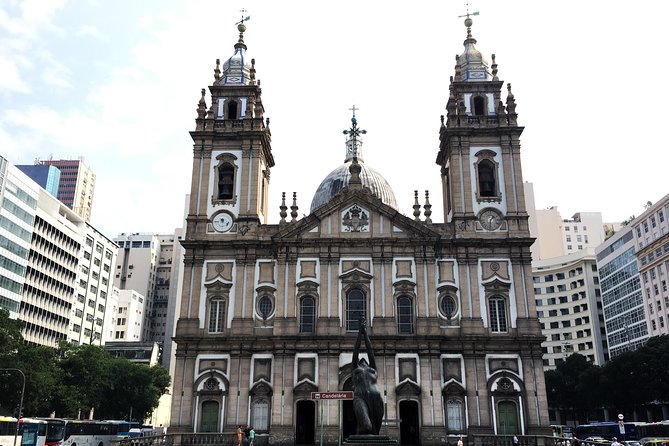
Your route opens at the Church of Our Lady of Candelária, a neoclassical church whose construction began in 1630 and finished in 1775. Even if you’re not a church-architecture person, this stop works because it gives you a baseline for what Rio’s old elite priorities looked like in stone and proportion.
Because the stop is built around quick viewing and free entry, you won’t get stuck waiting around for a long visit. You’ll get a look, learn what to notice, and then move on while the rest of your day still feels fresh.
The only “watch your expectations” point here is time. You’re scheduled for about 10 minutes. That’s enough to appreciate the style, but not enough to do a slow, devotional read of every detail. If you want long inside time, plan to return later on your own.
São Bento Monastery: art, carvings, and the library effect
The São Bento Monastery is a highlight for a reason. Founded in 1590, it’s considered one of the most important architectural patrimonies in Brazil. The stop often feels like the tour’s emotional center, because it’s not just the building. It’s the dense visual storytelling, especially inside.
You’ll see painted and gilt-carved elements, and you’ll also get access that many visitors miss if they’re rushing. In reviews, the Benedictine Chapel artwork and the Portuguese-style library of old books were repeatedly called out as special. That library detail changes how you experience the monastery, because it makes the place feel like both a spiritual space and an intellectual one.
The practical upside: the entry is free for this stop, so you’re not paying extra to have a meaningful moment. The practical drawback: it’s a short stop, about 10 minutes, so keep your eyes open, ask questions quickly, and if your guide points to something specific, follow their cue.
Mauá Square and the Olympic legacy: the city reinvented
After the Old Rio landmarks, the tour swings toward a more modern Rio mood. The Mauá Square stop is described as a gift from the Olympic legacy that changed life for local Cariocas, and it’s easy to see why. This is where the city shows how old waterfront and new ambition can share the same geography.
Here’s what you can look for:
- The area hosts major cultural anchors, including the Rio Art Museum and the Museum of Tomorrow
- The famous Cobra murals are part of the visual identity of the spot
- You’re moving through a place that feels planned for public culture and events
The key value is perspective. If your mental picture of Rio is mostly beaches and hills, this is a different side of the city. It’s about civic reinvention, public art, and the shift from “back to basics” downtown to “culture as a destination.”
A timing note: the tour includes specific moments for the Museum of Tomorrow viewing and nearby cultural center experiences. You might not get a long sit-down museum visit, but you’ll get the context and a sense of the museum area layout.
Praça XV and Paço Imperial: power, crowns, and paperwork
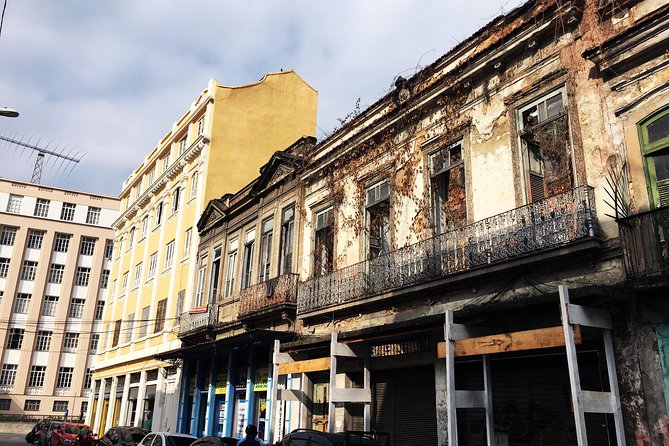
Praça XV do Novembro is a major stop in the story of Brazil’s leadership. It’s tied to the 1800s, when Brazil’s emperors were crowned there, along with other big historical events. Even if you only spend a few minutes, you’ll walk away understanding that this square wasn’t just decorative. It was operational history.
From there, you’ll pass through the area that includes the Paço Imperial, a Portuguese-style palace built for Brazil’s rulers as both a home and a workplace in the 1700s. It also connects to the Portuguese Royal Family when they arrived in Brazil. Seeing it in the middle of today’s downtown streets is the trick here. It turns a textbook idea into something you can locate.
You’ll also pass through market streets in downtown Rio and see Tiradentes Palace from outside. That outside sighting matters because it frames what kind of power sits in these blocks now versus then. Even from the street, it helps you understand the city’s center-of-gravity logic.
The only consideration: these segments can feel like “walk past and learn.” If you’re the type who wants long interior visits, you’ll need to do follow-up stops later.
Metropolitan Cathedral of Saint Sebastian: modern scale in a single glance
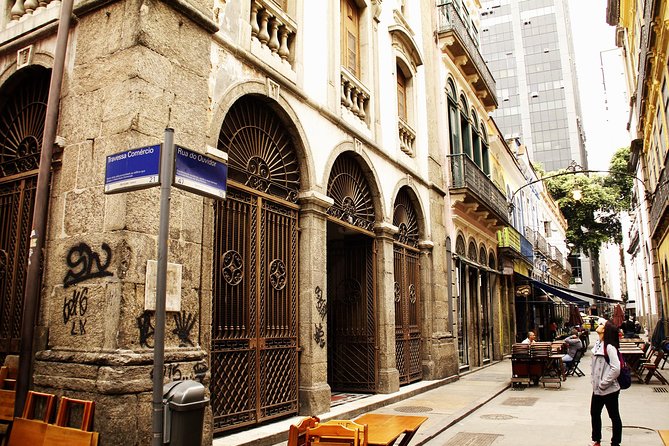
Next up is the Metropolitan Cathedral of Saint Sebastian. This is where Rio goes from decorative and ceremonial to massive and geometric. The cathedral is conical, with a 96-metre internal diameter, 106 metres external diameter, and an overall height of 75 metres.
Your visit is about 10 minutes, so again, this isn’t for a full slow architectural study. It’s for grasping the scale quickly and absorbing what makes the design important. If you like big interior volume and dramatic structure, you’ll get it fast here.
This stop also works as a rhythm-break. After churches and old palaces, the cathedral gives you a modern architectural statement that still fits the theme of how Rio uses public space to express identity.
Confeitaria Colombo: a free ticket, then your own coffee choice
The tour includes a stop at Confeitaria Colombo, with about 20 minutes scheduled. Admission is listed as free for this stop, but food and drinks are not included, so you’re on your own for what you buy inside.
This is a good place to pause. The tour timing gives you enough room to look around, maybe grab a pastry, and reset before the final stretch. It’s also one of those stops that feels like part of Rio’s everyday culture, not just a monument.
If you plan to eat, keep an eye on how much time you spend browsing. It’s easy to get distracted in a classic pastry shop, and then you lose time you wanted for the cathedral or final city squares.
What you’re really paying for with $60.77
Here’s how I’d size up the value.
You get:
- A guided walk through multiple major downtown sites
- Hotel pickup and drop-off in São Conrado, Leblon, Ipanema, Leblon? (and Copacabana are covered in the info)
- Free entry at listed stops
- A tour designed to run about 4 hours
What you don’t get:
- Food and drinks
- A slow, museum-style pace with long interior time at every stop
So for $60.77, the best fit is someone who values structure, a local guide, and efficient use of limited vacation time. It’s less ideal for someone who wants to wander alone for long periods or who hates walking through crowds and city streets.
Also, group size is capped at 35, which helps keep things manageable. In reviews, tours were sometimes very small, and that often meant more flexibility in how long you stay at each stop.
Who this tour suits best (and who should rethink)
This tour makes the most sense if you:
- Want a strong first-day or second-day overview of downtown Rio’s layout
- Like churches, architecture, and city squares with meaning
- Prefer walking with guidance rather than figuring everything out by bus and taxi
- Appreciate both the old city and Rio’s Olympic-era reinvention
You might reconsider if you:
- Have trouble with walking for a few hours and multiple short transitions
- Expect lots of free time to linger inside every site
- Are hoping food is included, because it isn’t
Tips to make it smoother, and to get more from each stop
A good guide can turn a 10-minute stop into something memorable. Reviews frequently mention guides like André and Melanie by name, plus guides such as JB and Jean-Baptiste, praised for how much they share and for keeping a comfortable flow. That’s a strong sign that asking questions is part of the value.
A few practical moves:
- Wear shoes you can walk in comfortably for several blocks at a time
- Bring water, especially if you do Confeitaria Colombo and then keep exploring on your own after the tour
- If you want extra time at a stop, ask your guide. Several people noted that guides were flexible about time spent at each location
- If you’re a first-time Rio visitor, this is a smart orientation day, because the route teaches you where the key landmarks cluster
Also, the tour notes that good weather is required. If it looks stormy, expect that they may need to adjust dates, so build your schedule with some wiggle room if possible.
Should you book Rio’s city walking tour?
I think you should book this tour if you want an organized, guided introduction to downtown Rio that connects historic churches and power squares with the Olympic legacy zone around Mauá Square and the Museum of Tomorrow area. For the price, hotel pickup and free-entry stops are doing real work for you, and the route is built so you can understand the city without spending the whole day in transit.
Skip it if you’re chasing a slow, sit-down museum day or if walking and city crowds are your least favorite part of travel. In that case, you could be happier with a more relaxed, single-area plan.
Bottom line: if you like architecture, public squares, and you want your Rio to make sense on the map, this is a solid, efficient half-day choice.
More Rio de Janeiro at Street Level






More Tours in Rio de Janeiro




More Tour Reviews in Rio de Janeiro



Historical Tours, compared.
 ★ 4.4Historic Rio and Santa Teresa Half-Day TourFrom $47228 reviews
 ★ 4.9Little Africa Heritage Walking TourFrom $40177 reviews
 ★ 5.0Explore Little Africa : Unveiling Afro Heritage in Rio de JaneiroFrom $8297 reviews
 ★ 4.8Paraty: Historic Centre Walking Tour & Cachaça TastingFrom $1996 reviews
 ★ 5.0Learn the History of Rio with an Unforgettable City Center Walking TourFrom $4982 reviews
 ★ 4.5Olympic Boulevard, Museum of Tomorrow & Historical RioFrom $7266 reviews
 ★ 5.0Private walk tour of Paraty’s historical center – BY PARATY TOURSFrom $8049 reviews
 ★ 4.1Rio: Olympic Boulevard, Museum of Tomorrow & History TourFrom $6747 reviews
Also filed under