
Review · TOURS
Rio Street Art Tour
Street art gets political fast in Rio. This 3-hour Rio Street Art Tour strings together major mural stops with subway and VLT rides, so you are not just hopping between landmarks. I love Wellington’s street-art stories and the practical transit route that connects neighborhoods in an easy loop. One thing to consider is the day depends on good weather, and there’s a fair bit of moving around.
You also get real context, not a drive-by slideshow. The stops focus on legalized graffiti history, the famous Selarón Staircase, and huge mural panels like the etnia piece (described as the largest graffiti mural in the world), plus the museum of tomorrow area. It is a private tour for your group, it runs near public transportation, and admission tickets for the listed sights are free.
Key things to know before you go
- Wellington is the draw: reviews repeatedly highlight his explanations, English, and city context through art.
- Transit included in the experience flow: you use the subway and VLT, not just walking.
- Big mural finale energy: you finish in Porto Maravilha, tied to the world-scale mural scene.
- Selarón Staircase gets real meaning: it is treated as a cultural landmark, not just a picture spot.
- Museums show up in the middle of street art: museum of tomorrow is part of the route.
- Plan for walking time: it is a 3-hour outing with several legs, including stair-and-street viewing.
Why Rio’s murals make more sense in motion
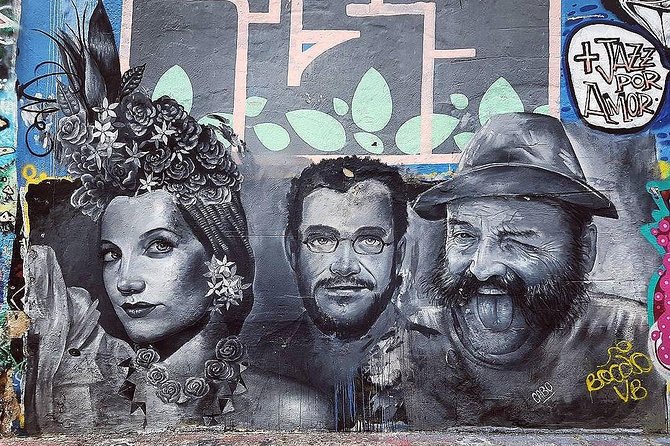
Street art in Rio hits different when you see it at street level, in the weather, with foot traffic nearby. This tour is built around that idea: you watch murals evolve into stories as you travel through neighborhoods. The rhythm matters. When you take the subway and VLT between stops, you also get a feel for how the city actually moves.
Another smart choice is the mix of eras and styles. You are not only shown the famous spots. You also get pointed to legalized graffiti history and European architectural influence, so the art feels placed in Rio’s bigger picture. That is what turns a fun photo walk into something you can talk about later.
Meeting at the Municipal Theater, then getting moving
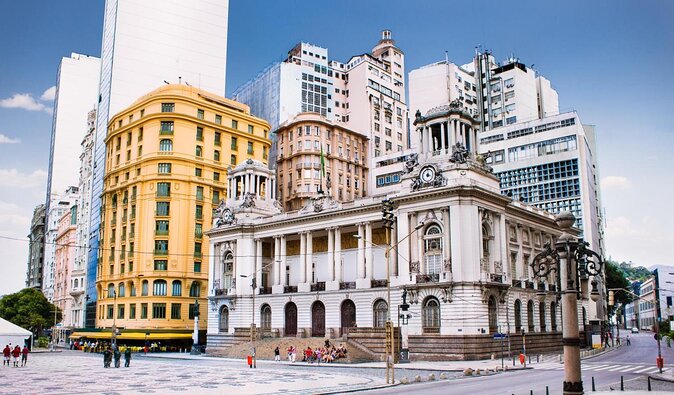
Your starting point is the Municipal Theater of Rio de Janeiro in Centro (Praça Floriano, S/N). It is a useful hub because you are in a central area and near public transportation. From there, the tour quickly gets you off the “one neighborhood, one view” track.
Expect the first stretch to set the tone: you start contemplating Rio’s first legalized graffiti, then you shift into architectural and urban context. That matters, because murals here are often tied to identity, politics, and who gets to speak in public space. If you want street art to feel more like culture than decoration, this opener helps.
If you are traveling with kids or you like a slower pace with frequent explanations, the tour’s structure tends to fit. One review specifically praised it as family-friendly and easy to follow for people new to the area.
Glória to Museum of Tomorrow: legalized graffiti, architecture, and a world-scale mural
The Glória stop is where the tour gives you a foundation. You begin by contemplating Rio’s first legalized graffiti, which is a big deal because it reframes graffiti from pure vandalism to a recognized public voice. Then you pass through parts of the city where European architectural influence shows up, so the streets start to read like a historical document.
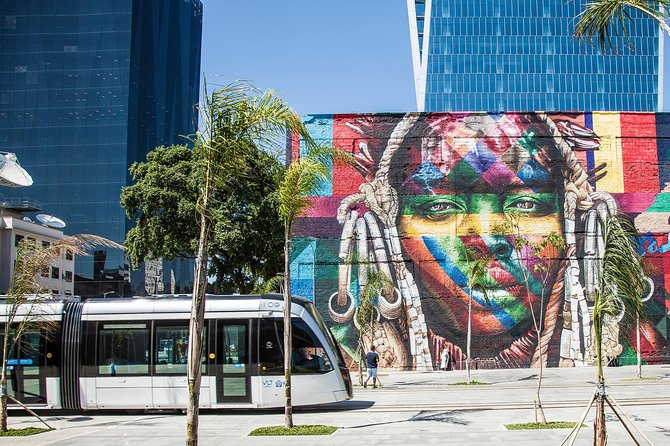
Next, you take the VLT to the etnia panel. That mural is described as the largest graffiti mural in the world, and it is the kind of sight that instantly answers the question, why do people travel for walls here. The scale is hard to “get” from Instagram. Seeing it in person, you understand why artists and cities treat big public art like an event.
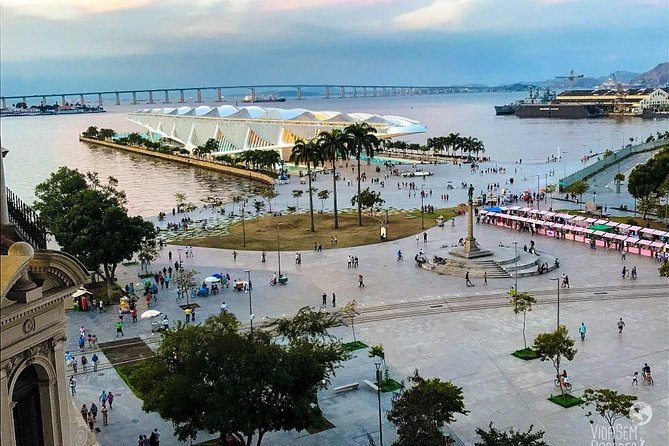
From there, the tour ends up at the museum of tomorrow area. Even if you are not a museum person, it’s a good contrast point: modern design and futuristic themes placed next to street-level expression. The stop includes admission ticket free for the listed portion, and it keeps the afternoon from feeling one-note.
Practical tip: if you are the type who likes to take breaks, build in a quick water moment around this section. The day has several short viewing points, but you are also in transit.
Escadaria Selarón: why the rainbow stairs are a landmark with a story
The Escadaria Selarón (the rainbow stairs) is one of Rio’s most recognizable spots, but this tour treats it like a landmark with layers. You spend time here, not just to move through quickly.
What I like about this approach is that it stops the experience from being only tourism theater. The stairs are visually loud, but their meaning is more interesting when someone connects it to the people and culture behind the art. You also get the sense of why it is the third most visited tourist spot in Rio, because it works as a social space as well as a sightseeing stop.
One practical note: because it is a major draw, it can be busy. The tour timing includes about 20 minutes at this stop, which is usually enough to see the art closely without feeling trapped in a long queue. If you have mobility concerns, plan on stairs and uneven surfaces, and consider going slower rather than trying to “power through.”
Cinelândia: libraries, the main theater, and street art across the city map
Cinelândia is a different mood. Instead of focusing only on murals, you shift to a civic and cultural area anchored by the main libraries and the main theater of the city. This is a useful reminder that public art and public buildings are part of the same conversation in Rio.
About halfway through, you ride the VLT again. That transit piece is not filler. It turns the route into a real city circuit. When you connect a grand cultural zone to street-level expression, the murals stop feeling like “decorations” and start feeling like another layer of public identity.
The stop includes admission ticket free for the portions listed, and you keep moving rather than sitting in one area for too long. For a 3-hour tour, that balance helps you get variety without exhaustion.
Olympic Boulevard museums zone: where Rio puts its big energy
When you reach the Olympic Boulevard, you enter the part of Rio known for major museums. This is a good checkpoint because it shows how the city frames art in both formal and informal settings. Street art tells one story, museum culture tells another, and Rio does not treat them as separate worlds.
This section runs about 30 minutes. That is long enough to absorb the architecture and the atmosphere, but short enough to keep the tour from turning into “standing around waiting for the next stop.” If you enjoy noticing building lines, street angles, and how people use public space, this is the kind of stop that rewards you.
It also sets up the next phase. Porto Maravilha feels like a different chapter, and the Olympic Boulevard zone acts like the transition point.
Porto Maravilha finale: giant mural payoffs and a strong last impression
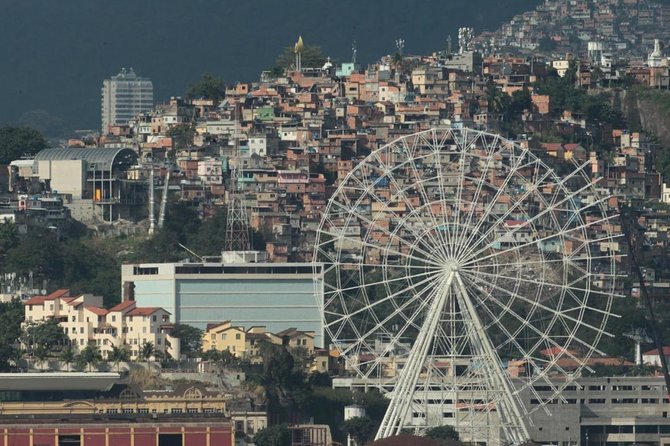
The tour ends in Porto Maravilha, where you meet the largest graffiti mural in the world. The value here is the sense of completion. Earlier you learned how murals link to legal recognition, architecture, and cultural context. Now you finish at mural scale so big it changes how you look at walls.
This final stop is the longest in the day, about one hour. That longer window is helpful because it lets you absorb details rather than just chasing the main sight and moving on.
One detail I found especially useful from guide style notes: the guide often points out places to eat and local spots, especially around the Selarón area and near where the route lands. Even if you only take one suggestion for lunch, it is a nice way to turn the tour into a smoother next step in your day.
If you are a mural hunter, pay attention to how the tour talks about the messages behind specific works. That interpretive layer is what makes the finale feel like more than a dramatic photograph.
Wellington’s guide style: storytelling that ties art to place
The reviews are consistent about one thing: the guide matters. Wellington comes up again and again for explaining the significance of murals and architectural elements, including social and political issues tied to specific artworks.
A few extra details that can really shape your experience:
- He speaks excellent English, which makes the cultural context easier to follow.
- He is also open to helping you practice Portuguese during the tour, which is a nice way to turn a sightseeing day into language reps.
- Several reviews describe the tour as personal and friendly, with a feel of exploring with an old friend rather than being rushed through a script.
For me, the best part is the way he connects street art to the city’s present and past. The tour does not treat murals as isolated images. It treats them as part of Rio’s ongoing argument about identity, power, and who gets to be seen.
Price and what you are really paying for
The price is $68.61 per person for about 3 hours, and it is a private tour for your group. Admission tickets for the listed sights are free, and the itinerary uses public transportation like the subway and VLT as part of the experience.
So what are you actually buying? You are buying:
- Guided interpretation of murals, not just access to them
- A route that strings together multiple neighborhoods without you needing to build the plan yourself
- A guide who can explain why the art is there, including political and cultural meaning
The tour is also booked about 30 days in advance on average, which is a hint to plan ahead if you are in Rio around peak travel weeks.
Value test: if you only want one or two famous murals and you are fine wandering on your own, you might skip this. But if you want the meaning behind the art, plus help navigating transit and getting to places you might pass over, the price starts to look fair quickly.
Logistics that affect your comfort level
This is a 3-hour outing, with stop times roughly around 20 minutes for key viewing blocks, plus longer stretches where scale matters, like the final Porto Maravilha stop. The tour is near public transportation and “most travelers can participate,” which suggests it is not designed for extreme off-road conditions.
Still, treat this as a walk-and-ride tour. You will be on streets, dealing with stairs at the Selarón area, and switching between transit legs. Bring water. Wear shoes you trust.
Also remember the experience requires good weather. If Rio is doing heavy rain that day, plan for a reschedule or a refund, depending on what the provider decides.
Who this tour fits best
This tour is a strong match if you:
- Love street art but want it explained beyond captions
- Want a city-intro that mixes neighborhoods instead of sticking to one area
- Enjoy public transportation and want to practice using it like a local
- Travel as a family, small group, or solo and want more direct attention than a large group tour
It might not be the best fit if:
- You want lots of museums only, with long indoor time
- You are looking for a low-effort day with minimal walking
- You are traveling in weather that is consistently unreliable (because it requires good weather)
Should you book Rio Street Art Tour?
Book it if you want Rio’s murals to feel like culture, not just street decoration. The combination of Wellington’s interpretation, major visual anchors like Escadaria Selarón and Porto Maravilha, and the city transit flow makes this a practical way to see more in less time.
I would especially recommend it as a first or second day activity. You get your bearings fast, and afterward, you will notice street art and architecture in a more informed way.
If you are picky about only the newest murals, keep expectations flexible. One review suggested the tour may skew toward older works. If you care a lot about fresh, newer pieces, you might mention it when you book and see what your guide can prioritize.
FAQ
What is the duration of the Rio Street Art Tour?
It is approximately 3 hours.
How much does the tour cost?
The price is $68.61 per person.
Is this tour private?
Yes. It is a private tour or activity, and only your group participates.
Where does the tour start and end?
It starts at the Municipal Theater of Rio de Janeiro (Praça Floriano, S/N – Centro). It ends in a different location, and the exact end point is provided with the details.
Are admission tickets included for the stops?
The listed admission tickets for the stops are free.
Does the tour run in any weather?
No. The experience requires good weather. If it is canceled due to poor weather, you will be offered a different date or a full refund.
What is the cancellation window?
You can cancel up to 24 hours in advance for a full refund, based on local time.
More Street Art in Rio de Janeiro

More Tours in Rio de Janeiro






More Tour Reviews in Rio de Janeiro



Tours, compared.
 ★ 4.8Rocinha Favela Walking Tour with Local GuideFrom $363,052 reviews
 ★ 4.7Rio De Janeiro: Half-Day Rocinha Favela Walking TourFrom $352,272 reviews
 ★ 4.6Angra dos Reis and Ilha Grande Full-Day TourFrom $771,673 reviews
 ★ 4.8Sunset Sailing TourFrom $75994 reviews
 ★ 4.7Christ, Selaron Steps, and Tijuca Park TourFrom $68857 reviews
 ★ 4.9Sunset Sailboat Tour with Open BarFrom $57785 reviews
 ★ 4.3Guided Jeep Tour through Tijuca RainforestFrom $90740 reviews
 ★ 4.0Jeep Adventure: Guided Tour through Tijuca Rain ForestFrom $88554 reviews