

Review · SUGARLOAF MOUNTAIN EXPERIENCES
Sugarloaf Mountain Climbing Trail
Sugarloaf climbing is a Rio wake up call. This is one of the most memorable ways to tackle Costão do Pão de Açúcar, combining hiking on trail, scrambling over rocky shores, and a short, protected vertical section that uses rope systems, chairs, and a helmet. You do not need mountaineering experience, just solid basic fitness and a willingness to go up slowly but steadily.
What I really like is how the whole experience is built around safety without sucking the fun out of it. The climb is led by guides from Companhia da Escalada, and the activity is certified by the Brazilian Association of Mountain Guides. Another big win: after you reach the summit and rest, your descent includes a free cable car ride from Sugarloaf down to Morro da Urca.
The main drawback to plan for is heights and exposure. You will spend time on exposed rock, and that short vertical climb is about 20 meters, so if you freeze up around vertigo, this may feel like a lot.
Key things I’d bet on for a great Sugarloaf climb
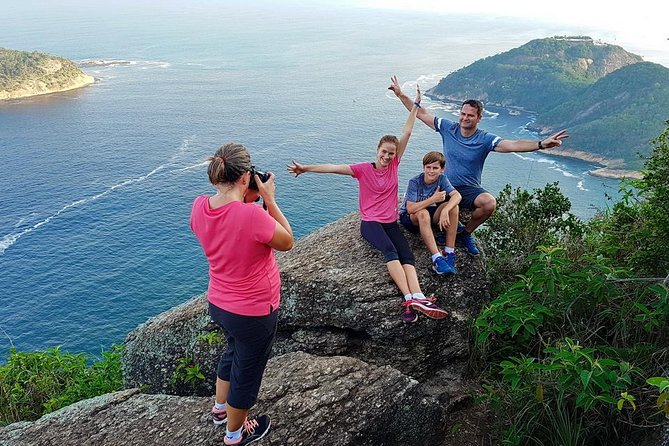
- A full circuit feel in about 4 hours, with no rushing, and the total time can shift with group size
- Trail plus easy climbing sections, not just one long hike
- A protected 20 meter vertical move, with ropes, chairs, and a helmet so you stay secured
- You pass Pedra Filosofal at about 350 meters, adding a real sense of Rio-specific adventure
- Free cable car descent to Morro da Urca, so you get the best of both worlds, effort and reward
- Private activity, meaning only your group participates
Why this Sugarloaf climb feels more real than the cable car
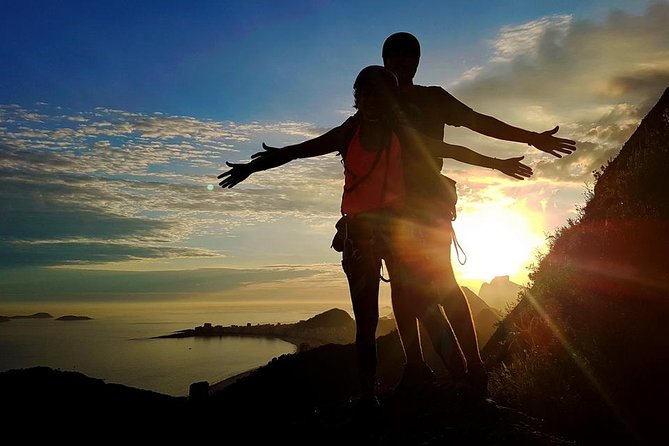
The cable car is great, but it shows you the view from a comfortable bubble. The Sugarloaf Mountain Climbing Trail is different because you earn the perspective. You’re walking and climbing along the south side, dealing with real rock underfoot and using hands at the spots that call for it. That physical involvement changes how you see Rio, even if you already know the photos.
I especially like the mix of effort and pacing. You are not sprinting to the top. The route is designed for an adventure pace, with time to enjoy what you’re looking at along the way. That matters on Sugarloaf, because the best moments often come while you’re mid-climb, not only at the summit.
And the route is not generic. You pass the famous Pedra Filosofal at about 350 meters. Even if you have never studied it before, seeing that landmark during the approach makes the whole outing feel connected to Rio’s geography, not just another viewpoint.
The timing that matters: 1 pm to 2 pm starts, 4 hours total
This is not a sunrise or evening stroll. The start window is set for the early afternoon, typically between 1 pm and 2 pm, and the activity runs during a 1 pm to 3 pm opening window. Plan your day around that, because you’ll want the energy for an active climb and not just fit it in at the end.
You should expect about 4 hours total, including both climbing and descent. The exact duration can vary depending on group size. A smaller group usually means fewer slowdowns and smoother movement between sections, while a larger group can add a bit of waiting as everyone stays together.
Also, you’re doing the route outdoors with a weather requirement. Good weather is necessary, so if Rio is doing its usual dramatic sky shifts, be ready for the operator to adjust.
Getting to the start at Av. Pasteur, 520 in Urca
The meeting point is Av. Pasteur, 520, Urca, Rio de Janeiro. Ending back at the same spot keeps things simple, and it’s convenient that it’s near public transportation.
If you’re the type who likes to arrive early and settle in, you’ll have an easier time. Use that buffer to check your clothes, confirm you have what you need for snacks if you want them, and mentally switch from sightseeing mode to movement mode.
This is also a private activity, meaning only your group participates. That’s a meaningful detail because it usually supports a calmer climbing rhythm and gives the guides more freedom to manage the pace for your group.
The route feel: trail, rocky shores, and a famous pass
The climb is described as partly trail and partly easy climbing over rocky shores. That is a good summary of how it feels in practice: you’ll walk sections where traction is straightforward, then transition into spots where you’ll use your hands and choose stable footing carefully.
You will follow the path toward the summit while passing Pedra Filosofal (about 350 meters high). That pass is one of those moments where the route becomes a story. Instead of “walk, then climb,” you’re moving through a real landscape line with a recognizable feature.
The guides will keep you moving along the safest lines, and they know the area well. You’ll likely hear safety reminders and technique cues at the right times, not in one long lecture at the start.
The most important part: the short, protected 20 meter vertical climb
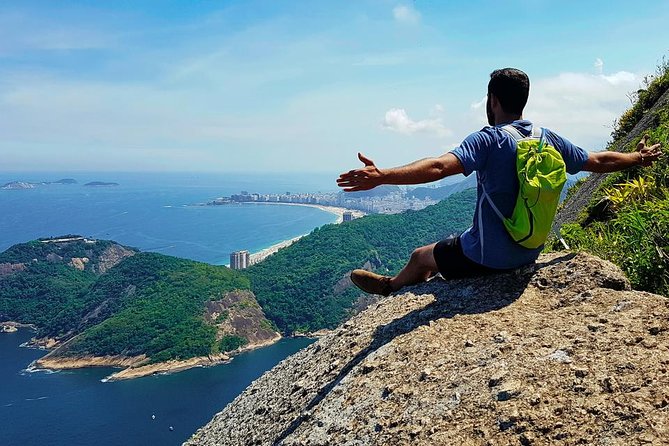
The standout technical section is a short stretch that is more vertical, about 20 meters. You are not expected to improvise. This is the part where all the necessary safety equipment comes out: ropes, chairs, and a helmet.
This matters because the vertical portion is the thing that makes beginners nervous, even when the rest of the hike feels manageable. With the rope system and helmet, you are secured while you do that move. It shifts the challenge from “Will I fall?” to “Can I keep calm and follow instruction?” That’s a huge psychological difference.
Guides also help you through the mechanics, not just point you at the rock. One of the most consistent themes you’ll hear in accounts of this route is that guides take safety seriously first, with professional technique and clear direction. That shows up as a confidence boost when you hit the steeper stretch.
If you are afraid of heights, this is the part you should take seriously. Even with protection, your mind still has to accept vertical movement. If you’re unsure, you can still give it a shot if your fitness is good and you can follow cues, but keep expectations realistic.
Summit time and the not-too-rushed descent plan
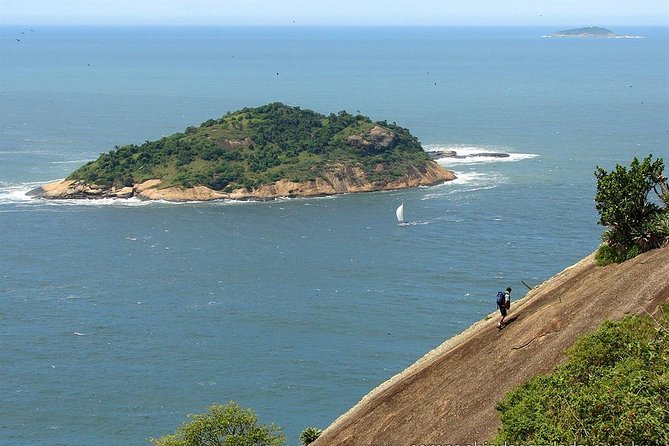
After the climb, you reach the summit and get a well-deserved rest. This pause is not just a nice photo break. It’s part of the pacing of the experience. Your body needs the reset, and your brain needs a moment to process the views after the physical work.
Then you start the descent in two phases. Part of it is by cable car (free of charge) from Sugarloaf down to Morro da Urca. The rest is by trail.
That split descent is smart. If you only climbed down, your legs would be your limiting factor. If you only took a cable car, you’d lose that last taste of the terrain. Here, you keep a bit of the hiking rhythm, but the cable car takes a real chunk of strain off your knees and ankles.
And yes, you get the classic win of this kind of experience: you see Rio from above, and then you come back down in a way that still feels like you did something, not just visited something.
What you actually get for the $62.78 price
At $62.78 per person for about 4 hours, this is not priced like a casual city tour. You are paying for gear, guide expertise, and the fact that you’re doing a protected climbing route.
Here’s what’s included:
- Use of climbing equipment
- Cable car descent from Sugarloaf to Morro da Urca (free of charge)
- Certification by the Brazilian Association of Mountain Guides
- Private activity
What’s not included:
- Snacks
So where does the value come from? You are not just buying access to a viewpoint. You’re buying a guided experience that includes the technical safety setup for the steep section, plus the real logistics of getting you through a route with climbing elements.
In Rio, that kind of guided safety is worth a lot, especially if you are new to climbing. One of the big advantages is that you get an equipment-supported experience with local professionals, instead of trying to guess the route on your own.
Booking is often done ahead of time. The average booking window is about 22 days in advance, so if you want specific dates, plan earlier rather than later.
Guides and the vibe: serious safety, friendly momentum
Companhia da Escalada is the provider, and the experience is private with only your group. In terms of vibe, the climb is aimed at being adventurous without being chaotic.
The guides are described as knowing the place like the back of their hand. That is exactly what you want on a route with exposed rock and a protected vertical segment. You need someone who can read the terrain and manage the group’s movement carefully.
You’ll also see guidance praise connected to named guides, including Sergio Ricardo, with special attention to professionalism and safety being first. You may also hear about Flavio and Sergio being flexible when plans need rearranging. Even if you are booking a fixed date, that kind of responsiveness is a good sign that the team can manage real-life change.
Who should book this, and who should think twice
This is suitable if you have moderate physical fitness and you’re comfortable with a sustained ascent that includes scrambling and hands-on climbing.
You do not need prior mountaineering knowledge, which is a relief. The big requirement is willingness. You’ll be working at a pace that respects the climb, and if you can keep moving through the harder bits, you’ll probably feel proud at the top.
This is not a great match if:
- you panic around exposed rock and heights
- you cannot follow safety instructions during the vertical 20 meter section
- you expect a relaxed walk with no hands-on movement
If you’re a strong hiker who likes challenges, this can be a very satisfying way to experience Sugarloaf. One of the strongest themes around the route is that people come away feeling it was both exciting and well managed, not dangerously sketchy.
Also consider the timing. A 1 pm to 2 pm start means you’ll be active in afternoon conditions. Plan your energy accordingly.
What to bring and how to prepare, without overthinking it
The essentials from the provided info are simple:
- Snacks are not included
- You’ll use climbing equipment supplied by the operator
Beyond that, your preparation is mostly about being physically ready and mentally ready for the vertical protected section. Wear clothing you can move in, because you’ll be climbing and scrambling over rocky areas. Choose footwear that gives you confidence on rock surfaces.
If you get nervous before heights, treat that as normal. The smart move is to lean on the guide’s instructions and let the protection systems do their job. The goal is to move steadily, not to “fight” the rock.
And if you love views, you’re in the right place. This route is designed for adventurers, meaning the best panoramas are earned, not just consumed.
Booking and weather: plan for a day outdoors
This experience requires good weather. If it’s canceled due to poor weather, you’ll be offered a different date or a full refund.
That’s practical in Rio, where rain and cloud cover can change quickly. If you’re building a trip schedule, leave some flexibility around your climb day so you can shift if conditions require it.
Should you book the Sugarloaf Mountain Climbing Trail?
Book it if you want a Sugarloaf experience that feels active, guided, and real. I think it’s especially worth it if you like hands-on challenges, want safety support for the steeper parts, and still want the classic Rio payoff of Cable Car views plus a descent to Morro da Urca. The private format is a bonus, and the fact that you get climbing equipment plus a certified guide team is a strong value signal for the price.
Skip it or think hard if heights and exposure make you tense. While the vertical section is protected with ropes, chairs, and a helmet, the mental side of vertigo is still your responsibility. If you want purely comfortable sightseeing, the cable car alone may fit better.
FAQ
How long is the Sugarloaf Mountain Climbing Trail experience?
It lasts about 4 hours on average, depending on the size of the group.
What is the price per person?
The price is $62.78 per person.
When does the tour start?
The start is between 1 pm and 2 pm, and the activity runs during the opening window of 1:00 PM to 3:00 PM.
Where do I meet the guide?
You meet at Av. Pasteur, 520, Urca, Rio de Janeiro, RJ, Brazil.
Do I need prior mountaineering experience?
No prior mountaineering knowledge is required. You do need reasonable physical conditioning and willingness to handle the climb and climbing sections.
What climbing gear is included?
The tour includes use of climbing equipment. During the vertical section, safety equipment like ropes, chairs, and a helmet is used.
Is the cable car included in the price?
Yes. The descent from Sugarloaf Mountain to Morro da Urca by cable car is included and is free of charge.
Are snacks included?
No. Snacks are not included.
What if the weather is poor?
This experience requires good weather. If it is canceled due to poor weather, you will be offered a different date or a full refund.
Can I cancel for a refund?
Yes, you can cancel for a full refund up to 24 hours in advance of the experience start time.
More Tour Reviews in Rio de Janeiro






More Rope Work on Rio Granite




Still on Sugarloaf? More Cable-Car Trips





Sugarloaf Mountain Experiences, compared.
 ★ 4.6Sugarloaf Cable Car Official TicketFrom $462,873 reviews
 ★ 4.5Rio: Christ the Redeemer, Sugarloaf, Selaron & BBQ LunchFrom $692,428 reviews
 ★ 4.0Skip the Line to Christ Redeemer, Sugar Loaf and Barbecue LunchFrom $113593 reviews
 ★ 4.6Christ the Redeemer and Sugarloaf Tour with…From $141499 reviews
 ★ 4.4Rio: 5-hour Christ the Redeemer and Sugarloaf Express TourFrom $109407 reviews
 ★ 4.8Rio: Christ the Redeemer Early Access and SugarloafFrom $125404 reviews
 ★ 4.5Two of Rio’s Best: Christ the Redeemer & Sugarloaf Mountain Half-Day TourFrom $118294 reviews
 ★ 4.0Rio: Sugarloaf Cable Car and Corcovado Train TicketsFrom $86267 reviews
Also filed under