
Review · TIJUCA NATIONAL PARK TOURS
Tijuca Forest w/ Chinese View,cascatinha Taunay,horto waterfall and parque laje
A green rainforest walk in the middle of Rio sounds unreal. This half-day route strings together Tijuca Forest viewpoints, waterfall time, and the Chinese tea story behind Rio’s famous lookouts.
I especially like how the first viewpoints give you big payoff without a long slog. Vista Chinesa is reachable by a paved trail, then you earn the view with a steep climb.
The other thing I like is the pace. Guides (I’ve seen names like Ederson, Jael, and Jabier pop up) tend to let you spend as long as you want at each stop, which helps if you care about wildlife and photos. The main drawback to plan for is the need for good weather, plus there is some walking and some steep sections.
Key Highlights to Focus On
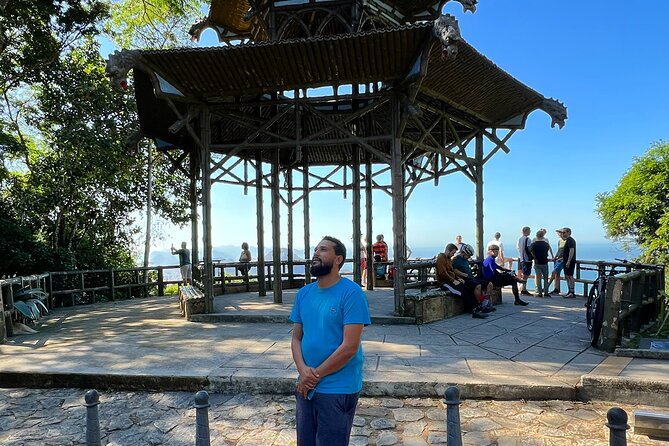
- Vista Chinesa panorama: a viewpoint tied to Chinese tea cultivation, with a short paved approach and a payoff view
- Emperor’s Table lookout: the Chinese labor and rice-crop story behind the Botanic Garden connection
- Cascatinha Taunay: a landmark stone bridge (Roman arch style) and Rio’s notable upper waterfall scenery
- Parque Lage forest time: Atlantic Forest inside the Jardim Botânico area, with close access to major sights
- Small group feel: a max group size of 14, with transport that can be more comfortable in a car or jeep
- Wildlife spotting rhythm: this route goes at a pace where you can actually look up and scan the trees
Tijuca Forest in a Half Day, Why This Route Works
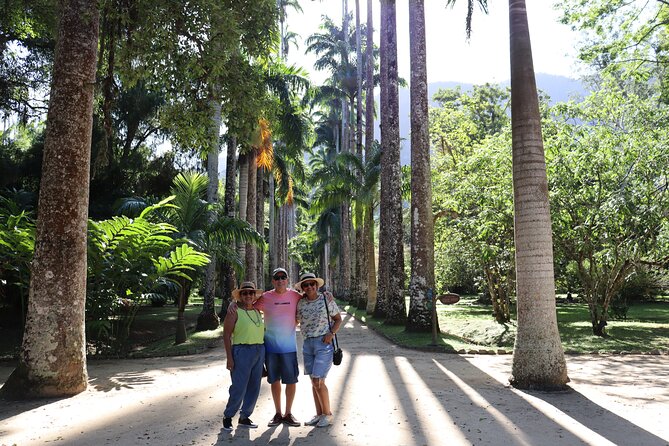
Tijuca Forest is the kind of place where you feel like you left the city, even though you’re still in Rio de Janeiro. This tour is built for that specific feeling. You get viewpoints, waterfall area time, and a forest park stop without spending the whole day commuting or waiting.
The structure also helps if you are short on time. A 4 hour tour means you can fit it between museum time, beach time, and even a late-afternoon neighborhood wander. And because the main sites have free entry tickets for this experience, you’re not budgeting your day around ticket lines and random add-ons.
I also like that the stops are varied. You are not doing just lookouts. You get water scenery, dense forest atmosphere, and a park in the Atlantic Forest ecosystem. That mix makes the day feel like more than a single viewpoint circuit.
Getting There: Transport, Group Size, and the Comfort Factor
This experience runs at about 4 hours and keeps group sizes to a maximum of 14 travelers. That matters. In a small group, you spend less time herding and more time actually looking around.
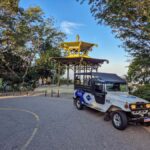
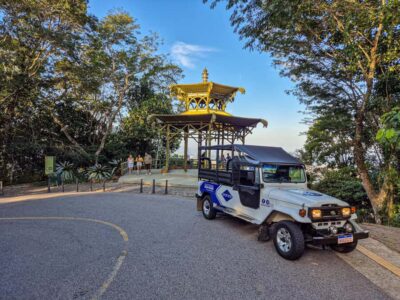
You’ll ride in a car or jeep if there are more than five people. Even if you are used to public transit, a short-ride model like this can be a big deal in Rio. Roads, hills, and parking can be annoying, so having the transport handled keeps your energy for walking and viewpoints.
One more practical point: bring your own water and snacks. Bottled water and snacks are not included. On a warm day in the forest, that can be the difference between staying comfortable at the viewpoints and rushing because you feel dehydrated.
Vista Chinesa: The Paved Trail to the Chinese Tea View
Vista Chinesa is the kind of stop that makes Tijuca feel like it has a personality. The monument was built in the early twentieth century in honor of the Chinese and the era of imported tea cultivation in Brazil. The idea is simple: understand why the lookout exists, then enjoy the panorama of Rio’s southern zone from the treeline.
What you will actually do here is walk. The trail has easy access and is fully paved. That is helpful if you want a smoother start without scrambling. Then, you still have a demanding steep climb to reach the lookout. So yes, it can be tough, but it is the kind of tough that is short enough to manage if you pace yourself.
A good way to enjoy this stop is to treat it as two phases:
1) Start slow on the paved section.
2) Save your energy for the steep final stretch.
If you care about photos, this is your early anchor. Views at Vista Chinesa are a big visual reward, and you set the tone for the rest of the forest day.
Emperor’s Table: The Chinese Labor Story Behind the Lookout
The Emperor’s Table stop adds a layer that makes the walk more interesting than a simple scenic break. This is where you learn that the Botanic Garden region was connected to Alto de Boa Vista by a cantilevered road, opened under major influence connected to the Baron of Bom Retiro, with execution and maintenance contracted to Thomas Cochrane.
The detail that stuck with me is the story about labor and failed agriculture. Records describe workers brought from China (from Macau) to develop rice crop efforts. When the crop attempt did not succeed, those workers were used to build the road.
It then connects back to the theme of Chinese presence in Rio. There is a chain of tea planters arriving under D. João VI influence, a later crop failure, and then the idea that Chinese communities spread through the region in the years that followed. In 1844, there is even reference to a building called Casa dos Chinas, likely a remnant of those earlier experiences.
Now, this is not a lecture-only stop. You’re still outdoors, and you still get a lookout experience. The name Emperor’s Table comes from the fact that above the area there was a place prepared for rest during frequent royal walks, later linked to the emperor.
One practical note: since this is part of your forest day flow, dress for changing cloud cover. Viewpoints can be spectacular or grey depending on weather, and you cannot always control that.
Cascatinha Taunay: Waterfall Time and the Roman Arch Bridge
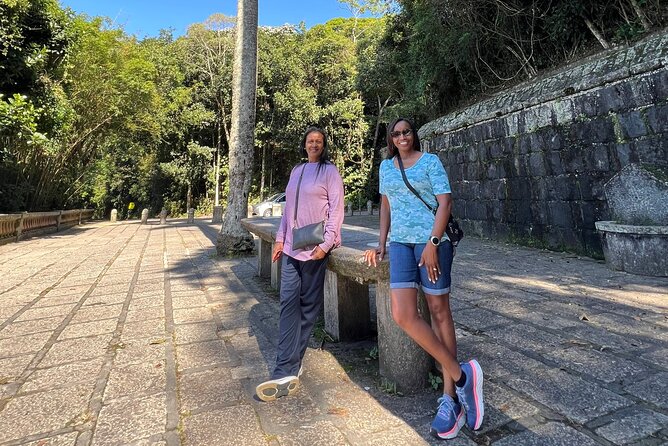
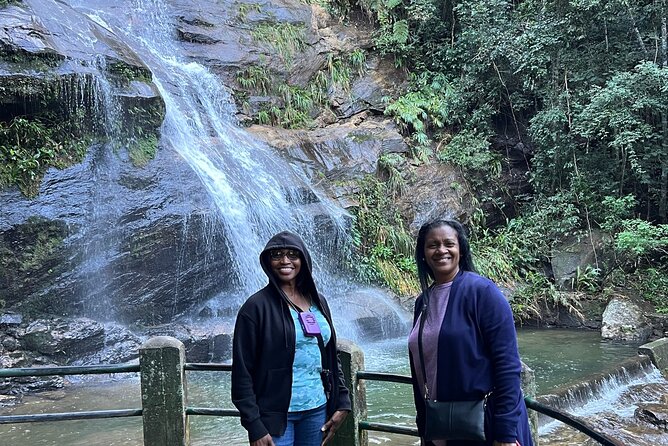
If you came to Rio for water and forest, Cascatinha Taunay is the anchor stop. This is not just a random waterfall. There’s a whole built feature in front of it: a stone bridge in Roman arch format.
The bridge was commissioned in 1860 under engineer Job de Alcântara, according to the site description for the area. The reason I like this stop is that it mixes nature and human craft. The waterfall area is dramatic, but you also get to notice the stonework and the way the bridge frames the scene.
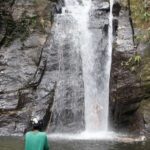
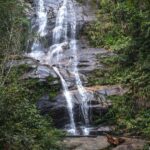
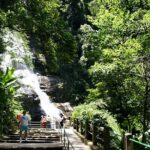
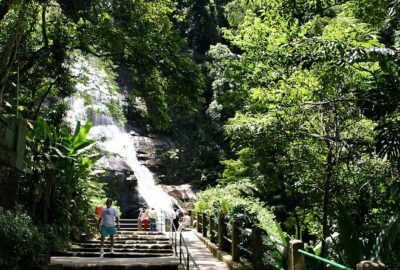
Then there is the waterfall itself. The cascatinha is described as the highest waterfall in the Tijuca National Park system, formed by waters of the Tijuca River, the Conde River, and other tributaries. That multi-river feeding idea helps explain why it feels substantial when conditions are right.
You also get an art-history layer. Artist Nicolas Antoine Taunay built a small house near the cascatinha in 1817 and later became known as a host of the forest, organizing meetings for the court. The Taunay house was demolished in 1946, and the site where a Cascatinha restaurant stood is being prepared and refurbished to become a café and new restaurant again.
That last bit is worth knowing. It means you might find food or at least a place to pause, but plans can change with renovations. Still, it reinforces the idea that this waterfall site is meant for lingering, not just a quick look and go.
How long should you linger? The official time in the schedule is about 1 hour. Use that time for:
- a slow walk near the falls framing,
- a pause to listen, and
- a moment to cool down if it is hot.
Parque Lage: Atlantic Forest Feel Near Rio’s Big Sights
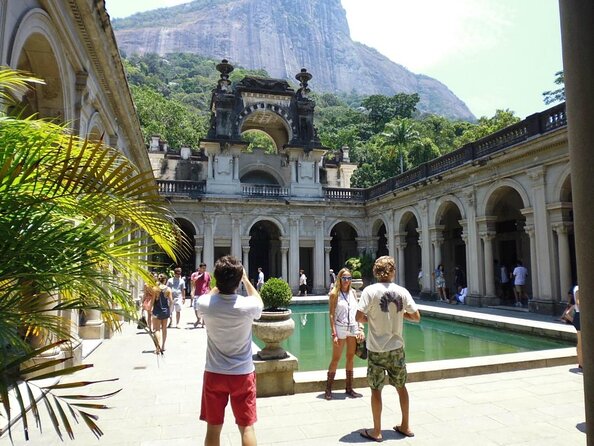
Parque Lage is where the day relaxes. It’s located in the Jardim Botânico neighborhood, in the south of Rio de Janeiro, close to major nearby attractions like the Jardim Botânico area and the Cristo Redentor region.
The park covers 52 hectares of forest and sits within the Atlantic Forest environment, part of the broader Tijuca National Park area. So you’re not just looking at a view, you are stepping into a protected forest zone with real tree cover.
You typically spend about 50 minutes here. That’s a perfect length if you want to feel surrounded by forest without turning the day into a long hike. And it works well after the viewpoints and waterfall stop, because you get a more gentle rhythm in the trees.
Also, this is one of those locations where you can blend nature with city plans. If you want to do more the same day, Parque Lage is positioned in a way that makes it easier to roll into nearby neighborhoods afterward.
One practical tip: bring a light layer. Forest shade can feel cooler than the sun outside the park, and it can also feel damp if the weather has been unsettled.
The Horto Waterfall Piece: What to Expect and What to Ask
Your tour description includes Horto waterfall as part of the experience. The detailed stop list you’ll see in the schedule can vary by day, and the amount of time at Horto may not always be separate from other forest segments.
So here’s the smart move: when you confirm, ask your guide where the Horto waterfall fits into the day plan and how long you’ll have there. That way you can manage your expectations and plan your photo time.
If you are the type who loves waterfalls, Horto is likely the kind of add-on that makes the day feel extra special. But because the exact timing is not spelled out in the basic stop list, your best value comes from asking a quick question upfront.
Price and Value: Is $88.21 a Good Deal?
At $88.21 per person, this tour is priced like a short, guided forest circuit with transportation and multiple major stops. The value question comes down to what you get for that money.
Here’s what you are buying:
- A guide for the full 4 hour experience
- A route that includes multiple themed stops tied to views, waterfall area time, and a forest park
- Free admission tickets for the scheduled stops
- A group cap of 14, which helps keep it personal
What you are not getting is also clear:
- Snacks and bottled water are not included
So to judge value for yourself, think about your own Rio style. If you like guided context, this tour has built-in meaning at Vista Chinesa and Emperor’s Table, where Chinese tea cultivation and labor history are part of what you’re seeing. If you are purely photo-focused with no interest in explanation, you might still enjoy it, but your value depends on how much you care about the story behind the lookouts.
Also, the transport piece matters. You are not taking a full-day hike to reach all these viewpoints. You are getting a managed path through the forest and back into the city.
Timing Tips: How to Make the Day Feel Easy
Good pacing is the secret sauce on this kind of Tijuca day. Here are the simple habits that make the experience smoother.
First, treat the steep climbs like a stair workout. Vista Chinesa includes a demanding steep climb to the lookout, even though the start is paved and easier. Slow steps win. That also helps your breathing, so you can enjoy the top instead of counting minutes.
Second, use the time at each stop for what it does best:
- At lookouts, prioritize scanning first, then photos.
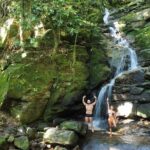
- At waterfalls, prioritize sound and shade, then walk a little closer.
- In Parque Lage, prioritize walking slowly and letting the forest reset your head.
Third, plan for weather. This experience requires good weather. If rain or fog shows up, viewpoints can disappear and footing can get slippery. In that case, expect the tour to be rescheduled or refunded, based on the conditions.
Who This Tour Suits Best
This is a great fit if you:
- want a half-day nature break without spending the entire day hiking,
- care about Rio sights that connect to real stories, not just a postcard view,
- like the idea of a guide who helps you move efficiently between locations.
It can also work well for people who want wildlife chances but are not trying to do a long trail hike. You might see monkeys and other birds, and the forest setting makes it feel exciting even when your sightings are random.
If you are a seasoned hiker, you might want more time than 4 hours for deeper trails. But if your goal is a smart sampling of Tijuca Forest highlights, this schedule is built for it.
Should You Book This Tijuca Forest Tour?
Yes, I think you should book it if you want a guided, efficient Tijuca experience that hits several major highlights in one go, especially Vista Chinesa, Cascatinha Taunay, and Parque Lage.
Book with extra care if:
- steep climbs and uneven footing are a concern for you,
- you only travel on sunny days and can’t be flexible,
- you are expecting this to be a full hiking day with long trekking.
If you want an easy-to-manage, nature-and-history day in Rio, this is the kind of tour that makes sense. Just bring water and a snack, wear grippy shoes, and go into it ready to slow down for the viewpoints and the forest atmosphere.
FAQ
How long is the Tijuca Forest tour?
It lasts about 4 hours.
What is the price per person?
The price is $88.21 per person.
What does the tour include?
It includes a tour guide and car or jeep transportation if there are more than five people.
Are admission tickets required for the stops?
Admission tickets are listed as free for the main stops in the schedule.
Is bottled water or snacks included?
No. Snacks and bottled water are not included.
How big is the group?
The maximum group size is 14 travelers.
Is the tour suitable for most travelers?
Most travelers can participate, based on the experience information.
Does the tour require good weather?
Yes. The experience requires good weather, and if it is canceled due to poor weather, you will be offered a different date or a full refund.
Can I cancel and get a full refund?
Yes, you can cancel up to 24 hours in advance of the experience start time for a full refund.
Under the Palms: More Garden Hours




Waterfalls and Caves Near Rio de Janeiro


Further Into Tijuca Forest

Tijuca National Park Tours, compared.
 ★ 4.7Christ, Selaron Steps, and Tijuca Park TourFrom $68857 reviews
 ★ 4.3Guided Jeep Tour through Tijuca RainforestFrom $90740 reviews
 ★ 4.0Jeep Adventure: Guided Tour through Tijuca Rain ForestFrom $88554 reviews
 ★ 4.9Rio: Tijuca Forest Small Group Hike to Caves and WaterfallsFrom $69536 reviews
 ★ 4.5Rio: Half-Day Jeep Tour at Floresta da TijucaFrom $60353 reviews
 ★ 4.34-Hour Botanical Garden & Tijuca Forest TourFrom $51275 reviews
 ★ 4.5Rio de Janeiro Botanical Garden & Tijuca Forest TourFrom $55168 reviews
 ★ 4.9Tijuca Forest Challenge Hike Full-Day TripFrom $86163 reviews